
Key Takeaways
- Ground-level inspections can reveal many visible tree concerns before severe weather arrives.
- Dead limbs, cracks, decay, weak branch connections, and a new lean deserve prompt attention.
- Never approach a tree, limb, or debris pile that may be in contact with a power line.
- Large limbs, split trunks, uprooted trees, and trees on structures require professional help.
- Photographs, receipts, and written notes can make storm-related insurance conversations easier.
- Thoughtful pruning, watering, and mulch practices support recovery for trees that remain stable.
Nashville yards are part of what makes neighborhoods from East Nashville to Bellevue feel established, shaded, and welcoming. They can also become a concern when strong winds, heavy rain, ice, or lightning move through Middle Tennessee. Preparing trees before a weather event is often simpler, safer, and less stressful than reacting after limbs are already down. When a large tree needs attention, a trusted tree service company in Nashville TN can help homeowners evaluate risks that are not safe to handle from the ground.
Storm readiness is not about removing every mature tree or turning a yard into an empty space. It is about noticing warning signs, protecting people and property, and making practical decisions before a storm creates an emergency. A careful plan can help preserve healthy trees while reducing hazards around roofs, driveways, sidewalks, fences, and utility connections.
Why Storm-Ready Trees Matter in Nashville, TN
Nashville’s climate presents unique challenges for property owners managing mature trees. The region experiences variable weather patterns throughout the year, with spring bringing severe thunderstorms, summer occasionally producing tropical systems, and winter ice storms that can snap branches under heavy frozen loads. In Nashville, a single storm can combine gusty winds with soaked ground, leaving branches more likely to break and roots less able to hold a compromised tree upright. The local weather safety guidance for Nashville-area residents emphasizes planning ahead for hazardous weather, and that same approach belongs in the yard.
The geography of Nashville, TN, also influences how trees respond to weather. Properties ranging from the rolling hills of Green Hills to the riverside areas near the Cumberland River experience different wind patterns and drainage conditions. Low-lying areas may retain more moisture after rain, affecting tree stability, while elevated neighborhoods might face stronger wind gusts. Trees close to homes, parked vehicles, outdoor gathering spaces, and overhead lines deserve special attention because even a fallen limb can pose a serious obstacle or require costly repairs.
Nashville’s neighborhoods have deep connections to their tree canopies. From the established oaks in Belle Meade to the younger trees lining new developments, the urban forest contributes to property values, air quality, and community character. However, healthy trees are never completely risk-free, but routine care can uncover visible concerns early. Tree work also carries real dangers, especially when climbing, using ladders, or operating chainsaws around damaged wood.
How to Spot Risk Before the Storm
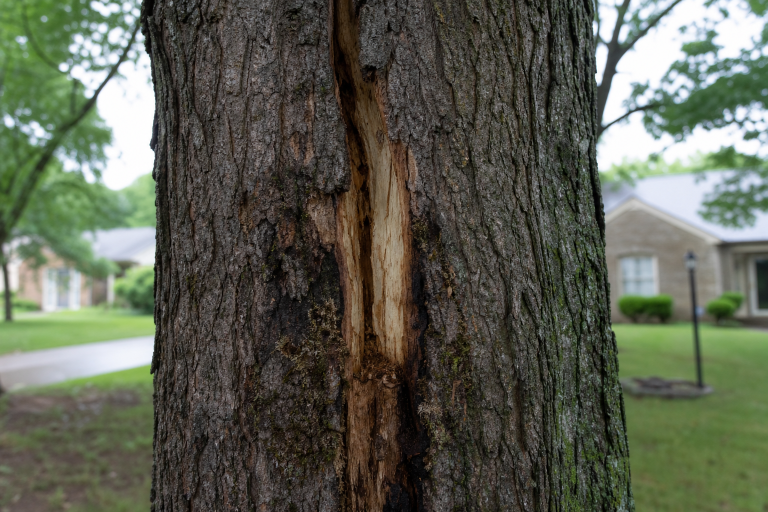
Walk the property in daylight and assess trees from the ground. Look for dead branches without leaves when nearby limbs are growing, loose or peeling bark, cavities, cracks, mushrooms near the base, or soft-looking wood. Notice branches that rub together, narrow branch joints, exposed roots, lifted soil, or a lean that appears new.
Nashville homeowners should pay particular attention to trees that overhang structures or utility lines, which are common on Middle Tennessee properties. Many Nashville homes have older utility infrastructure, and trees growing near these lines pose additional risk during storms. A ground inspection cannot reveal every internal defect, so mature trees with visible damage, decay, or an unusual lean should be evaluated by a qualified professional. This is especially important for property owners in Nashville neighborhoods with large, established trees that may have hidden structural weaknesses.
Consider the specific microclimates around your property in Nashville, TN. Trees near water features may have different root conditions than those in drier areas. Properties on slopes experience different wind and water pressure than flat properties. Trees planted in compacted soil or near recent construction may be more vulnerable than those in ideal growing conditions. These Nashville-specific factors can influence how a tree responds to severe weather.
A Simple Seasonal Yard Checklist
- Walk the yard after periods of strong wind or heavy rain.
- Check whether limbs touch the roof, gutters, siding, or service lines.
- Remove loose patio items, planters, umbrellas, and decorations before storms.
- Keep driveways and access routes as clear as possible for emergency crews.
- Inspect recently planted trees and trees affected by landscaping or construction.
- Store contact information for the electric utility, insurer, and tree-care provider.
- Review local Nashville weather patterns and plan yard work accordingly.
- Monitor trees after significant temperature changes or drought periods common to Nashville.
What to Do Before Severe Weather
Major pruning is not a last-minute storm-warning task. Arrange inspections and pruning when conditions are calm, visibility is good, and there is time to make informed decisions. Remove clearly dead or weak branches through proper pruning, clear drainage paths when safe, and move vehicles away from trees that show obvious defects.
Nashville residents should plan tree maintenance during the dormant season, when it is easier to see the tree’s structure and the work causes less stress on the tree. Early spring and late fall are typically ideal times for Nashville, TN properties. Review your home insurance policy before trouble begins, keep a basic inventory of exterior improvements, and know where to find policy numbers. For trees that need ongoing care, practical guidance for care before and after storms recommends addressing structural weaknesses before wind and ice expose them.
Consider working with a local Nashville, TN, arborist who understands the region’s soil conditions, native tree species, and typical weather patterns. They can provide recommendations tailored to your specific property and neighborhood conditions. Establish a relationship with a qualified professional before an emergency occurs, so you have trusted guidance when storms threaten.
How to Make a Safe First Look After a Storm
Wait until the storm has passed and it is safe to go outside. Start from a distance. Keep children and pets away from fallen limbs, split trunks, and trees with hanging branches. Do not stand beneath a damaged canopy, because broken limbs can remain caught overhead before dropping later.
Stay far away from any tree or branch near a utility line. Downed wires may be difficult to see, and a tree can conduct electricity if it contacts an energized line. Nashville residents should be especially cautious around utility infrastructure common in established neighborhoods. Photograph damage from a safe location, but do not pull on limbs, climb debris, or attempt to free a branch that is under tension.
If you suspect any contact with power lines, contact the utility company immediately. In Nashville, that would typically be Nashville Electric Service (NES). Never attempt to move or handle any tree or branch that might be in contact with electrical lines, regardless of whether the line appears to be dead.
When to Call a Professional
Professional assistance is the safer choice when a tree has landed on a building, vehicle, fence, or other structure. It is also appropriate for split trunks, partly uprooted trees, large suspended limbs, trees leaning toward a home, and any situation involving power lines.
Nashville homeowners should not hesitate to call a qualified tree service company for assessment, even if damage seems manageable. Professional arborists in Nashville, TN, have the proper equipment, training, and insurance to handle risky situations safely. They can also assess whether a tree can be saved or should be removed, an important decision that affects your property’s long-term appearance and value.
Questions to Ask Before Hiring Help
- Are the workers insured for the work being performed?
- Will the estimate identify removal, hauling, and cleanup services?
- Who is responsible for logs, branches, and site cleanup?
- Will the company provide the scope of work and price in writing?
- Are permits or local requirements relevant to the planned work?
- Do you have references from other Nashville, TN, property owners?
- Are you familiar with Nashville’s tree preservation ordinances?
How to Document Damage
Before moving nonurgent debris, photograph the entire yard, then take close-up images of broken limbs, trunk splits, root disturbance, and damage to structures. Record the storm date, save receipts for emergency work or temporary repairs, and keep estimates and invoices together. Contact the insurance provider before making nonessential changes whenever possible.
Documentation becomes especially important if you file an insurance claim for storm damage in Nashville. Your photos and records should clearly show the condition before and after the event. Keep all receipts from professional tree service companies, and maintain notes about any temporary repairs or cleanup work you performed yourself.
Ways to Help Trees Recover
Not every storm-damaged tree needs to be removed. Small broken branches may be pruned cleanly, while larger wounds and structural damage deserve expert assessment. Avoid applying wound paint unless a qualified professional specifically recommends it. Protect exposed roots from foot traffic, water during dry stretches without keeping the soil constantly saturated, and use a broad, shallow mulch ring that does not touch the trunk.
Nashville’s climate can support strong tree recovery if the right conditions are maintained. After storm damage, monitor the tree throughout the following growing season to assess whether it is recovering or declining. Some trees may take years to fully recover their previous form. Trees that were healthy before the storm are more likely to survive and thrive again, while trees that were already stressed may struggle to recover. A qualified Nashville, TN, arborist can help you make this determination and, if appropriate, develop a recovery plan.
Common Mistakes to Avoid
- Using a chainsaw without training, safety equipment, or a clear escape path.
- Climbing a ladder near damaged branches or using a chainsaw above shoulder height.
- Cutting or touching trees that may contact power lines.
- Removing healthy limbs simply because a tree looks uneven after a storm.
- Accepting vague verbal pricing or paying in full before cleanup is complete.
- Ignoring a small crack, lean, or root problem that worsens over time.
- Hiring unlicensed or uninsured contractors in Nashville, TN.
- Overlooking local tree preservation ordinances that may apply to your property.
Building a Long-Term Tree Care Plan for Nashville, TN Properties
Create a simple map of trees near your Nashville home, driveway, fence, road frontage, and utility connections. After significant weather, note changes in each tree’s condition. Schedule periodic inspections for large, mature, or high-value trees, and plant new trees where their mature roots and branches will have adequate room. A steady plan gives homeowners more options than an emergency decision made during the next storm.
Nashville neighborhoods vary significantly in their tree composition and management needs. Properties in older Nashville communities may have trees planted decades ago that are now reaching mature size, with associated risks and rewards. Newer neighborhoods may have younger trees still establishing their root systems. Understanding your specific situation helps you plan appropriately.
Consider the long-term vision for your Nashville, TN, property. Trees provide significant benefits—shade, privacy, wildlife habitat, and aesthetic value—but they also require maintenance and carry inherent risks. A balanced approach that preserves healthy trees while managing legitimate hazards creates the best outcome. Work with local Nashville professionals who understand the community’s environmental conditions and can help you maintain a thriving landscape that enhances your neighborhood for years to come.
Conclusion
Storm-ready trees begin with ordinary attention long before dark clouds arrive. By inspecting from the ground, acting on visible warning signs, staying clear of power lines, and bringing in trained help for dangerous work, Nashville, TN, homeowners can protect their property while giving healthy trees a stronger chance to recover and thrive. The effort you invest today in understanding and managing the trees on your Nashville property can prevent costly damage, preserve the beauty of your neighborhood, and ensure a safer environment for your family and community.