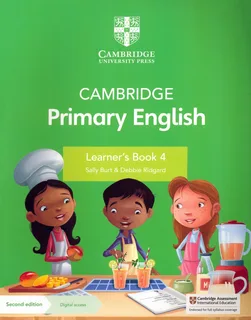

Strong English skills develop gradually as children learn to understand words, form sentences, read with meaning, organise ideas, and communicate clearly. For primary learners, these abilities are closely connected rather than separate subjects. A well-designed primary English book can support this development by giving children structured opportunities to encounter language, practise skills, and apply what they learn in different contexts.
The most useful English learning experiences do more than ask children to memorise grammar rules or complete isolated exercises. They encourage children to connect vocabulary with reading, reading with comprehension, and comprehension with speaking and writing. With the right guidance and suitable resources, these connections can make English learning more purposeful and enjoyable.
1. How English Skills Work Together for Better Learning
English learning is sometimes divided into vocabulary, grammar, reading, comprehension, and writing. While these categories are useful for teaching, children experience language as one connected system.
A child needs vocabulary to understand a passage, sentence structure to express an idea, comprehension to interpret information, and writing skills to communicate thoughts clearly. Improving one area can therefore create opportunities to strengthen another.
Why Connections Matter
Consider a child who learns the word “enormous.” Simply knowing its meaning is useful, but the learning becomes richer when the child can recognise it while reading, use it in a sentence, compare it with “small,” and eventually include it in a written description.
This kind of connection helps transform vocabulary from something a child recognises into something they can actively use.
Build Skills Around Meaning
English practice becomes more meaningful when children understand why they are using a particular skill.
For example:
- Vocabulary helps children describe ideas precisely.
- Grammar helps them organise those ideas.
- Reading introduces new language and information.
- Comprehension helps them interpret what they read.
- Writing gives them a way to communicate their own ideas.
- Speaking allows them to use language in real interactions.
A resource that brings these elements together can help children see English as a practical communication skill rather than a collection of unrelated exercises.
2. Building Vocabulary That Children Can Actually Use
Vocabulary is one of the foundations of English development. However, learning a long list of unfamiliar words does not necessarily mean that children can use those words effectively.
Children benefit from encountering words repeatedly in meaningful contexts. A new word can first appear in a story, then in a question, later in a sentence-writing activity, and eventually in everyday conversation.
Learn Words Through Context
Context helps children understand how a word functions. If a child encounters the word “delighted” in a story about someone receiving good news, the surrounding events provide clues about its meaning.
Adults can strengthen this learning by asking:
- What do you think the word means?
- Which part of the sentence gives you a clue?
- Can you think of a similar word?
- Can you use the word in your own sentence?
This encourages children to think about vocabulary rather than simply memorise definitions.
Develop Word Relationships
Children can also expand vocabulary by learning how words relate to one another.
Useful relationships include:
- Synonyms
- Antonyms
- Categories
- Word families
- Descriptive words
- Action words
- Nouns and related verbs
For example, learning “decide,” “decision,” and “decisive” can help children notice how words change according to their grammatical role.
3. Turning Vocabulary Into Stronger Sentences
Knowing many words is useful, but children also need to understand how words work together. Sentence construction gives learners a way to turn individual vocabulary items into complete ideas.
A child may know the words “boy,” “park,” and “run,” but a structured sentence such as “The boy ran quickly across the park” communicates a much clearer picture.
Start With Complete Ideas
Children can begin by answering simple questions:
- Who?
- What happened?
- Where?
- When?
- Why?
- How?
These prompts encourage them to add information to basic sentences.
Gradually Introduce Sentence Variety
Once children are comfortable with simple sentences, they can explore different ways of expressing ideas.
For example:
Simple: The girl opened the door.
Expanded: The curious girl carefully opened the old door.
Connected: The curious girl carefully opened the old door because she heard a strange sound outside.
The purpose is not to make every sentence complicated. Instead, children learn that sentence structure can change depending on the amount and type of information they want to communicate.
4. Developing Reading Skills Through Meaning and Context
Reading development involves more than recognising individual words. Children need to understand how words combine to create meaning across sentences and paragraphs.
A suitable English resource can introduce children to different types of passages, characters, situations, and vocabulary. These varied contexts give learners opportunities to practise reading for different purposes.
Encourage Children to Read With a Purpose
Before reading a passage, children can think about what they are looking for.
They might read to:
- Find a particular fact
- Understand what happened
- Identify a character’s feelings
- Discover the main idea
- Explain a sequence of events
- Work out the meaning of an unfamiliar word
Having a purpose encourages active reading rather than simply moving from one sentence to another.
Use Context to Understand Unfamiliar Words
Children will inevitably encounter words they do not know. Instead of immediately providing every definition, adults can encourage them to examine the surrounding sentences.
They can look for:
- Descriptions
- Examples
- Contrasting information
- Actions
- Pictures or illustrations
- Other words that provide clues
This develops a useful independent reading skill that children can carry into more advanced texts.
5. Strengthening Comprehension Beyond Finding Answers
Comprehension questions should not be limited to locating a sentence and copying it. Strong comprehension also involves interpreting information, connecting ideas, and explaining reasoning.
A child may find a factual answer in a passage but still need support when asked why a character behaved in a certain way or what might happen next.
Explore Different Levels of Understanding
Questions can move from direct recall toward deeper interpretation.
For example:
- Recall: What happened first?
- Understanding: Why did the character leave?
- Inference: What might the character have been feeling?
- Application: What would you do in a similar situation?
- Evaluation: Do you think the character made a sensible choice? Why?
This progression allows children to practise different forms of thinking while working with the same passage.
Encourage Evidence-Based Answers
When children give an opinion about a passage, ask them to explain what helped them reach that conclusion.
For example:
“I think the character was nervous because…”
This simple sentence structure encourages children to connect their interpretation with evidence from the text.
6. Helping Children Organise Ideas Before Writing
Writing can become difficult when children have ideas but do not know how to organise them. Before asking them to produce a complete paragraph, it can help to break the task into smaller decisions.
A child writing about a memorable day might first identify:
- Where the event happened
- Who was involved
- What happened first
- What happened next
- What was most interesting
- How the experience ended
- How they felt about it
This gives the child a structure from which to build a paragraph or short composition.
Use Planning to Reduce the Blank-Page Problem
A simple plan can make writing feel less intimidating. Children do not need to write every sentence in advance. A few keywords or short notes may be enough.
For example:
Place: beach
People: family
Event: found shells
Surprise: saw a crab
Feeling: excited
The child can then turn these points into connected sentences.
Encourage Specific Details
Instead of simply saying “It was nice,” children can learn to describe what made the experience enjoyable.
They might write:
“The cool wind made the afternoon at the beach pleasant.”
Specific details make writing more informative and help children express their thoughts with greater precision.
7. Using Grammar as a Tool for Clear Communication
Grammar can sometimes appear as a set of rules that children need to memorise. A more useful perspective is to show how grammar helps readers and listeners understand meaning.
For example, changing the tense can show when an event happened. Changing a pronoun can clarify who is being discussed. Using conjunctions can show relationships between ideas.
Connect Grammar With Real Sentences
Instead of practising a rule only through isolated questions, children can examine it within sentences.
For example:
Past: The boy walked to school.
Present: The boy walks to school every day.
Future: The boy will walk to school tomorrow.
The comparison helps children see what the grammatical change communicates.
Focus on Meaning Before Correction
When correcting grammar, adults can explain why the change matters.
Rather than simply saying “This is wrong,” they can ask:
“What do you want the reader to understand?”
This encourages children to think about communication and gradually become more aware of their own language choices.
8. Connecting Reading and Writing for Deeper Learning
Reading and writing can reinforce each other. Children encounter sentence patterns, vocabulary, descriptive language, and different ways of organising information while reading. They can then experiment with those features in their own writing.
A story describing a busy marketplace, for example, can become a model for a child’s own descriptive paragraph.
Borrow Structures, Not Sentences
Children can observe how an author creates an opening, introduces a character, describes a setting, or builds an event.
They can then use the structure as inspiration for their own work.
For example:
Reading: The author begins by describing the setting.
Writing: The child begins their own composition by describing a different setting.
This develops writing awareness without encouraging children to copy the original text.
Create Reading-to-Writing Connections
After reading, children can respond through:
- A short character description
- An alternative ending
- A personal response
- A diary entry
- A short summary
- A description of a different setting
- A dialogue between characters
These activities encourage children to process what they have read and express their own ideas.
9. Encouraging Confident Everyday Communication
English learning should extend beyond written exercises. Speaking gives children opportunities to use vocabulary, sentence structure, and comprehension skills in real time.
A child who learns a new word through reading can be encouraged to use it when describing an object, explaining an experience, or answering a question.
Ask Open-Ended Questions
Questions that have more than one possible answer encourage children to construct their own responses.
For example:
- What do you think happened next?
- Which character would you like to meet?
- How could the problem have been solved differently?
- What would you do in that situation?
- Which part of the story interested you most?
These questions encourage children to explain rather than respond with a single word.
Build Confidence Through Explanation
Children can practise explaining familiar topics such as a favourite activity, a story they have read, or how they completed a task.
This develops vocabulary and sentence organisation while helping children become more comfortable expressing their thoughts aloud.
10. Creating a Connected English Learning Routine
English development does not require every skill to be practised separately. A short learning session can combine several related activities.
For example, a child might:
- Read a short passage.
- Identify two unfamiliar words.
- Work out their meanings from context.
- Answer comprehension questions.
- Choose one new word to use in a sentence.
- Write a short response about the passage.
- Explain the response aloud.
This creates a chain in which one activity naturally supports the next.
A Skill-Connection View of English Learning
| English Skill | What It Connects | Learning Activity | Everyday Transfer |
| Vocabulary | Words and meanings | Context-based word discovery | Describing people and objects |
| Grammar | Words and sentence meaning | Sentence comparison | Speaking and writing clearly |
| Reading | Text and ideas | Purposeful reading | Understanding instructions |
| Comprehension | Information and reasoning | Evidence-based questions | Explaining opinions |
| Writing | Ideas and structure | Guided composition planning | Writing messages and descriptions |
| Speaking | Language and communication | Explanation activities | Expressing thoughts confidently |
This connected approach helps children see that English skills are not isolated tasks. Each one can strengthen another.
11. Choosing Resources That Grow With the Learner
When choosing English learning materials, parents can look for resources that offer a practical mix of explanations, examples, guided exercises, and opportunities to apply new skills. As children progress, primary school books can be selected according to their current abilities, helping them work with content that is neither too easy nor unnecessarily difficult. Materials that provide the right level of challenge can encourage steady progress, while resources that closely match a child’s learning stage can make practice feel more manageable and rewarding.
Look for Meaningful Variety
A useful English resource may include different forms of learning activity, such as:
- Vocabulary exercises
- Grammar practice
- Reading passages
- Comprehension questions
- Sentence construction
- Writing tasks
- Language-based thinking activities
Variety is valuable when each activity has a clear purpose. More exercises are not automatically better if they do not contribute to the learner’s development.
Consider Progression
Children benefit when activities gradually increase in complexity. Early questions may focus on identifying information, while later tasks can require comparison, explanation, inference, or independent writing.
This progression allows children to build on what they already know rather than facing a sudden jump in difficulty.
Use Resources Alongside Real Reading
Books designed for learning can provide structured practice, but children should also have opportunities to read stories, informational texts, poems, and other age-appropriate materials for enjoyment.
Real reading exposes children to natural language and gives them opportunities to encounter vocabulary and sentence structures in meaningful contexts.
12. Helping Parents Support English Learning at Home
Parents do not need to turn every reading session into a formal lesson. Small conversations can reinforce skills developed through structured practice.
After a child reads a passage, a parent might ask what the story was about, which part was interesting, or what the child would have done differently. Such conversations encourage children to recall, interpret, and express ideas.
Parents can also encourage children to notice language in everyday situations. Menus, signs, labels, instructions, messages, and simple written information all provide opportunities to see how English is used outside school.
Final Takeaway
Building strong English skills is a gradual process in which vocabulary, grammar, reading, comprehension, writing, and speaking continually support one another. A well-structured learning resource can help children practise these connections while developing greater confidence and independence.
English development becomes more meaningful when children have opportunities to explore ideas, practise language, and use new skills in everyday situations. Rather than focusing on completing a large number of exercises, parents can choose activities that encourage children to read, think, write, and express themselves with greater confidence. In this kind of learning routine, resources from Singapore Asia Publishers can provide additional material for practising key language skills while complementing the child’s regular schoolwork. With the right balance of guidance and independent practice, children can gradually develop stronger and more connected English abilities.
Frequently Asked Questions
1. What should children learn from a primary English book?
A suitable primary English book can support several areas, including vocabulary, grammar, reading, comprehension, sentence construction, and writing. The exact focus should match the child’s age, learning stage, and current needs.
2. How can parents improve their child’s English vocabulary?
Parents can introduce new words through stories, conversations, and everyday situations. Asking children to explain a word, use it in a sentence, or identify a similar or opposite word can help turn passive vocabulary into active language.
3. Why is comprehension important for primary students?
Comprehension helps children understand, interpret, and respond to written information. It also supports later learning because students need to understand questions, instructions, explanations, and longer texts across different subjects.
4. How can children improve English writing skills?
Children can improve by planning ideas before writing, reading different types of texts, practising sentence construction, and learning to add relevant details. Regular opportunities to explain and organise their own ideas can also support writing development.
5. Should primary English practice include speaking activities?
Yes. Speaking gives children opportunities to use vocabulary and sentence structures in real communication. Conversations, explanations, storytelling, and open-ended questions can complement reading and writing practice.