
Introduction
The name Wuschitz is an interesting and relatively uncommon surname that has attracted attention through genealogy, historical records, and contemporary creative work. Although it may not be familiar to everyone, the name has connections to Austrian family history and is particularly recognizable through the work of Stefanie Wuschitz, an Austrian artist and researcher known for exploring the relationship between technology, creativity, and society.
In today’s digital world, people frequently search for unusual names to discover their origins, meanings, and cultural significance. Wuschitz is one such name that raises interesting questions about European family history and the individuals who have helped bring it into contemporary discussions.
Understanding Wuschitz requires looking beyond its spelling. Its historical appearances, possible variations, and association with artistic research provide several interesting ways to explore the subject. This article examines the available information about Wuschitz, its historical background, its connection to art and technology, and why the name continues to attract curiosity.
What Is Wuschitz?
Wuschitz is primarily recognized as a family surname rather than an ordinary English word. Available genealogical records associate the name with Austria, including historical records from Vienna. However, its exact linguistic meaning and earliest origin have not been conclusively established.
Like many European surnames, Wuschitz may have experienced spelling variations over different generations. Historical documents were often created by local officials, religious institutions, and other record keepers. Differences in pronunciation, language, and handwriting sometimes resulted in multiple spellings of the same family name.
The surname is also associated with Stefanie Wuschitz, an artist and academic researcher whose work focuses on feminist technology, digital culture, and creative experimentation.
It is important to distinguish the historical surname from the professional achievements of individuals who carry it. The name itself does not represent a particular technology, company, or scientific theory.
Historical Background and Possible Origins of Wuschitz
Family names provide valuable information about the movement of people, regional traditions, and historical communities. Investigating a surname can reveal connections that might otherwise remain hidden in old documents.
The available genealogical information connects Wuschitz with Austria. Historical church records from Vienna contain references to individuals carrying this surname. These records demonstrate that the name has a documented presence in the region, although they do not establish the complete history of every family associated with it.
Genealogy databases also identify Woschitz and Wutschitz as possible spelling variations. Such similarities can be useful when researching ancestors because older records sometimes contain inconsistent spellings.
Nevertheless, similar surnames do not automatically indicate a shared family background. Researchers need supporting evidence, including dates, locations, family relationships, and original documents.
For anyone interested in understanding the origins of Wuschitz, historical church registers, birth records, marriage certificates, and immigration documents can provide useful starting points.
Stefanie Wuschitz: A Recognizable Name in Contemporary Art
One of the most recognizable people associated with Wuschitz is Stefanie Wuschitz, an Austrian media artist and artistic researcher.
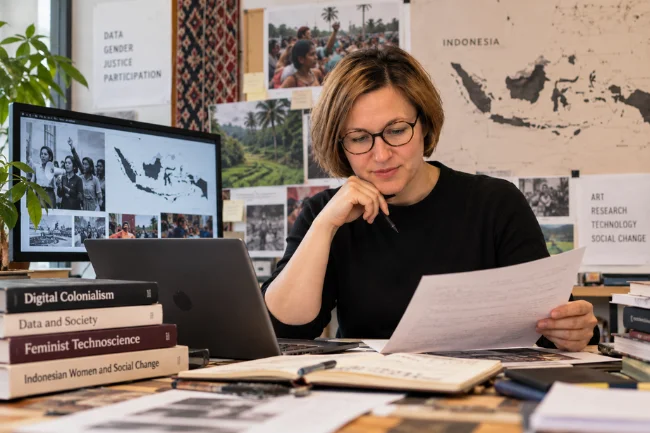
Her professional interests bring together contemporary art, technology, feminist research, and digital culture. Rather than treating technology as something that exists independently of society, she examines how technological systems are influenced by cultural expectations, social structures, and unequal access to resources.
Her work explores important questions about who develops technology, whose experiences are represented, and how creative communities can participate in technological innovation.
Stefanie Wuschitz studied Transmedia Arts and later continued her education at New York University. She completed doctoral research on feminist hackerspaces in 2014.
Her academic and artistic experience has allowed her to work across different institutions and international research environments. Through exhibitions, collaborative projects, publications, and artistic experimentation, she has contributed to conversations about the social responsibilities associated with technology.
Mz* Baltazar’s Laboratory and Its Importance
An important part of Stefanie Wuschitz’s professional history is her involvement in establishing Mz* Baltazar’s Laboratory.
Founded in Vienna in 2009, Mz* Baltazar’s Laboratory is a feminist art and technology collective. It creates opportunities for people to explore technology through collaboration, experimentation, creative projects, and shared learning.
Traditional technology environments have sometimes been dominated by limited perspectives and unequal participation. Feminist technology initiatives challenge these limitations by encouraging broader involvement and questioning established assumptions.
Mz* Baltazar’s Laboratory provides an environment where art and technology can come together. Participants can investigate digital tools, experiment with electronic materials, and exchange ideas about the relationship between technology and everyday life.
The collective also demonstrates that technological knowledge does not have to remain restricted to professional engineers or large institutions. Creative communities can contribute meaningful ideas and develop practical skills through cooperation.
Wuschitz helped establish and co-organize the collective until 2023. Its history represents an important part of her contribution to contemporary feminist art and technology.
Wuschitz and Feminist Hacking
Feminist hacking is another important concept connected with Stefanie Wuschitz.
The word hacking is frequently associated with computers and cybersecurity. However, hacking can also describe experimentation, modification, creative problem-solving, and finding alternative ways to use existing technologies.
Feminist hacking expands this approach by examining the social and cultural structures surrounding technological development.
For example, a technology product may appear neutral, but its design can reflect the priorities and assumptions of the people who created it. Feminist approaches encourage researchers to question these assumptions and consider experiences that traditional development processes might overlook.
Wuschitz explores these questions through artistic research and collaborative activities.
Her work demonstrates that technology can become a medium for discussing equality, representation, environmental responsibility, and cultural identity.
This approach is particularly relevant in a world where digital systems increasingly influence communication, education, employment, and personal relationships.
The Relationship Between Art and Technology
One reason Stefanie Wuschitz stands out is her interdisciplinary approach.
Many people think of art and technology as separate subjects. Art is often associated with imagination and expression, while technology is connected with engineering, mathematics, and practical applications.
However, contemporary creative practices increasingly combine these areas.
Digital installations, interactive artworks, animations, electronic sculptures, and experimental hardware demonstrate how technical tools can become artistic materials.
Wuschitz uses creative research to investigate the deeper meaning of technological objects and systems. Her projects encourage audiences to consider not only what technology can accomplish but also how it affects communities and individuals.
This combination of artistic expression and critical investigation makes her work relevant to discussions about contemporary media and digital culture.
Open-Source Technology and Collaborative Learning
Open-source technology is another important subject connected with Wuschitz’s professional interests.
Open-source development generally allows people to examine, share, modify, and improve technological resources under appropriate licenses.
This approach encourages collaboration rather than limiting knowledge to a small group of developers or organizations.
It can also make technological education more accessible. Students, artists, independent researchers, and community organizations can learn from existing projects and contribute their own improvements.
Collaborative learning is especially valuable when working with unfamiliar technical subjects. Instead of relying entirely on formal instruction, participants can exchange knowledge, test ideas, and learn through practical experience.
Wuschitz’s interest in open-source culture reflects a broader belief that technological knowledge should be questioned, shared, and developed through inclusive participation.
Ethical Hardware and Environmental Responsibility
Technology has an environmental impact that is often overlooked when people focus only on convenience and performance.
Electronic devices require raw materials, manufacturing processes, transportation, energy consumption, and eventual disposal. As digital products become more widespread, electronic waste has become an increasingly important environmental concern.
Ethical hardware research examines these issues by considering how electronic products are designed, manufactured, maintained, and discarded.
Wuschitz has explored these subjects through artistic research and projects connected with feminist hacking and responsible technology production.
Her approach encourages people to think about the complete lifecycle of electronic devices rather than viewing them as disposable products.
Repairability, material transparency, reuse, and accessible technical knowledge are important parts of this discussion.
These ideas are relevant to individuals, educational institutions, technology companies, and policymakers. More responsible technological practices can help reduce unnecessary waste while encouraging greater awareness of the resources behind everyday devices.
Digital Colonialism and Global Technology
Another significant area of research associated with Stefanie Wuschitz concerns digital colonialism.
Digital colonialism describes situations in which technological systems, digital infrastructure, data ownership, and economic power create unequal relationships between different communities and regions.
For example, technology developed by powerful international organizations may influence how information is collected, distributed, and controlled in other parts of the world.
These relationships raise questions about digital independence, cultural representation, local knowledge, and technological ownership.
Wuschitz’s artistic research investigates ways to understand and challenge these inequalities.
Her work connected with Indonesia is particularly relevant to discussions about digital culture, technological production, and the importance of local perspectives.
This research demonstrates why technology should not be understood only through technical performance. Its economic, political, cultural, and environmental consequences also deserve attention.
Why Is Wuschitz Attracting Online Attention?
There are several reasons why people may search for Wuschitz.
First, uncommon surnames naturally create curiosity. Individuals researching their family histories often look for information about spelling variations, geographical connections, and historical appearances.
Second, Stefanie Wuschitz has developed a professional identity that connects several interesting subjects. Her work brings together art, feminist research, technology, and environmental responsibility.
Third, digital culture has increased public interest in questions about privacy, access, open-source development, and the social consequences of technological innovation.
These subjects are discussed across academic institutions, creative communities, and technology organizations.
As a result, Wuschitz can lead people toward several different topics, depending on whether their original interest concerns genealogy, contemporary art, or digital research.
How to Research the Wuschitz Family Name
Anyone interested in the family history of Wuschitz can begin with genealogical databases and historical archives.
The first step is to search for the exact surname and record any available geographical information. Austria, particularly Vienna, is a useful starting point based on the historical references currently available.
The next step is to investigate possible spelling variations. Woschitz and Wutschitz may provide additional research leads.
Researchers should also examine original records whenever possible. A database entry can provide a helpful clue, but an original church register or civil document offers stronger historical evidence.
Comparing dates, family relationships, occupations, and locations can help establish whether different records refer to the same individuals.
It is equally important to avoid assuming that everyone with a similar surname belongs to the same family. Reliable genealogy depends on documented relationships rather than spelling similarities alone.
The Broader Significance of Wuschitz
The name Wuschitz provides an interesting example of how a relatively uncommon surname can connect historical research with contemporary professional achievements.
Its genealogical presence offers opportunities to explore Austrian family history, while Stefanie Wuschitz’s career introduces important conversations about technology, creativity, and society.
Her work demonstrates that technological progress should involve more than developing faster devices or creating increasingly sophisticated digital systems.
It should also involve asking meaningful questions about access, responsibility, environmental sustainability, and cultural representation.
These discussions are becoming increasingly important as artificial intelligence, digital communication, and connected technologies continue to influence modern life.
The combination of artistic experimentation and critical research offers an alternative way of understanding these developments.
Frequently Asked Questions About Wuschitz
1. What does Wuschitz mean?
Wuschitz is primarily recognized as a family surname. Its exact linguistic meaning has not been conclusively established through the available historical and genealogical information.
2. Where does the Wuschitz surname originate?
Available genealogical records associate the surname with Austria, including historical church records from Vienna. However, the precise origin of every family carrying the name requires further historical investigation.
3. Who is Stefanie Wuschitz?
Stefanie Wuschitz is an Austrian media artist and artistic researcher known for exploring feminist hacking, open-source technology, digital culture, and ethical technology production.
4. What is Mz* Baltazar’s Laboratory?
Mz* Baltazar’s Laboratory is a feminist art and technology collective founded in Vienna in 2009. It encourages creative experimentation, technological learning, and collaborative artistic practices.
5. Is Wuschitz a technology company?
No. Wuschitz is a surname rather than the name of a recognized technology company or software platform.
6. What are the possible spelling variations of Wuschitz?
Genealogical resources identify Woschitz and Wutschitz as possible related spelling variations. However, these similarities do not establish that all families with these names share the same ancestry.
7. Why is Stefanie Wuschitz important in contemporary technology discussions?
Her work examines how technology intersects with gender, power, culture, environmental responsibility, and social inequality. She uses artistic research to encourage more inclusive and responsible approaches to technological development.
Conclusion
Wuschitz is a distinctive surname with documented connections to Austrian genealogy and a contemporary association with the work of Stefanie Wuschitz. Although its precise linguistic origin remains uncertain, available historical records provide useful starting points for anyone interested in exploring its background.
Stefanie Wuschitz’s artistic and academic career adds another dimension to the name. Through feminist hacking, open-source culture, ethical hardware research, and investigations into digital colonialism, she has contributed to important discussions about how technology shapes modern society.
Ultimately, understanding Wuschitz involves appreciating both the importance of historical identity and the influence of contemporary creative work. Whether someone discovers the name through family research or an interest in art and technology, it offers an opportunity to explore subjects that connect history, innovation, culture, and human creativity.