
Introduction
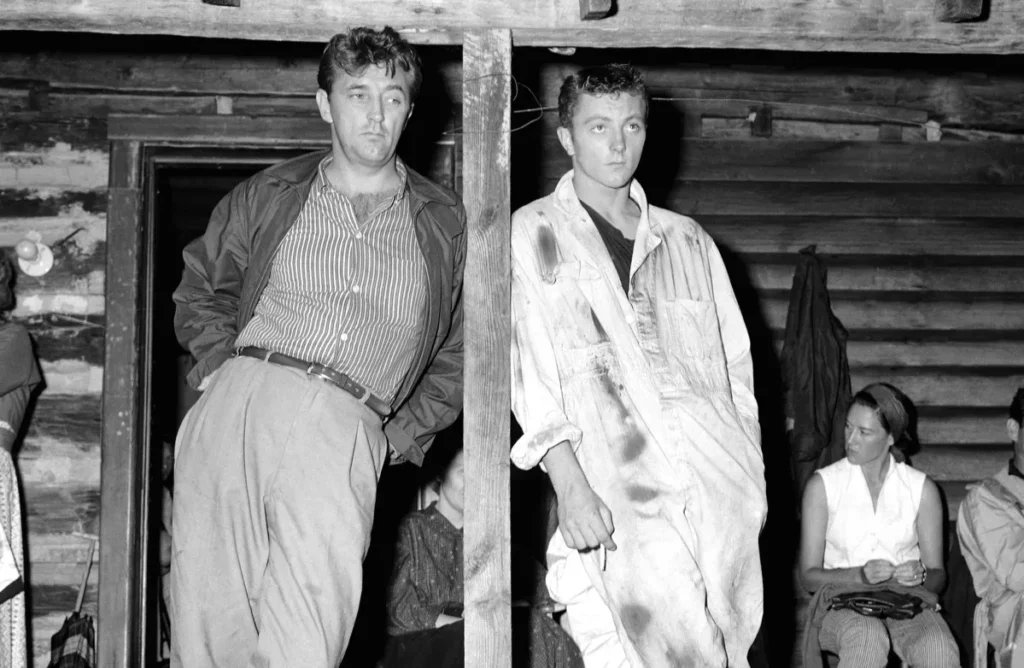
Robert Mitchum was one of the most recognizable and influential actors of classic Hollywood cinema. Known for his deep voice, relaxed personality, distinctive screen presence, and remarkable acting ability, he became a legendary figure in American film history. Unlike many actors who relied on dramatic expressions and energetic performances, Mitchum developed a natural and understated acting style that made his characters memorable. Whether he played a dangerous criminal, a mysterious stranger, a military officer, or a troubled hero, he brought an unmistakable personality to every role.
During a career that lasted more than five decades, Robert Mitchum appeared in numerous films and television productions. He became particularly famous for his performances in film noir and crime dramas, although his talent extended to westerns, war films, thrillers, and romantic stories. His contribution to cinema continues to attract audiences who appreciate classic movies and powerful performances.
Beyond his professional achievements, Mitchum lived an unconventional life. His experiences, outspoken personality, and reputation for independence helped establish him as one of Hollywood’s most fascinating personalities. His story is not simply about becoming a successful actor; it is also about developing a unique identity in an industry that often demanded conformity.
Early Life and Family Background
Robert Mitchum was born on August 6, 1917, in Bridgeport, Connecticut, United States. His full name was Robert Charles Durman Mitchum. He grew up in a working-class family and experienced several challenges during his childhood. His father, James Thomas Mitchum, worked in the railroad industry, while his mother, Ann Harriet Gunderson, later raised the family after his father’s death.
Mitchum’s childhood was affected by the loss of his father when he was still young. This experience created significant changes in the family’s circumstances. His mother eventually remarried, and the family moved through different locations as they tried to establish a stable home.
As a young boy, Robert was known for his independent personality and adventurous behavior. He was not particularly interested in following traditional expectations, and he often found himself getting into trouble. His rebellious nature became one of the characteristics that people later associated with his public image.
During his teenage years, Mitchum traveled around different parts of the United States. He worked several jobs and experienced life outside the comfortable environment of a traditional family home. These experiences helped him develop an understanding of different people and social situations, something that later benefited his acting career.
Education and Early Struggles
Robert Mitchum did not follow a conventional educational path. He attended several schools but struggled with discipline and academic expectations. His adventurous personality often made it difficult for him to remain in one place for long periods.
As a teenager, he spent time traveling and working in different locations. He reportedly experienced difficult living conditions and took various temporary jobs to support himself. These early experiences exposed him to people from different backgrounds and gave him a perspective that was quite different from that of many future Hollywood stars.
His early life was not glamorous. Before becoming famous, Mitchum faced financial difficulties and uncertainty about his future. However, these challenges helped shape the confident and independent personality that became part of his identity.
Eventually, he found opportunities in entertainment. He became involved in theater and performed with different stage groups before moving toward the film industry. His natural appearance, distinctive voice, and ability to communicate emotion made him suitable for acting, even though he had not initially planned a traditional Hollywood career.
The Beginning of Robert Mitchum’s Acting Career
Robert Mitchum’s journey into professional entertainment developed gradually. Before receiving major film opportunities, he worked in theater and appeared in smaller productions. These experiences allowed him to understand performance techniques and develop confidence in front of audiences.
His early Hollywood work included small roles and supporting appearances. Like many actors of his generation, he had to accept opportunities that did not always provide immediate recognition. However, he gradually became more visible because of his strong screen presence.
Mitchum’s physical appearance and calm acting style helped him stand out. He did not need exaggerated gestures to attract attention. Instead, he often communicated emotions through facial expressions, body language, and the way he delivered dialogue.
His breakthrough came during the 1940s, when he began appearing in more significant films. His performance in war-related productions helped establish him as a promising actor. Soon, filmmakers recognized that he could handle complex characters and bring realism to stories involving danger, conflict, and emotional tension.
Rise to Hollywood Stardom
The 1940s were an important period in Robert Mitchum’s career. During this decade, he developed a reputation as a talented performer capable of portraying complicated characters. His acting style was different from the dramatic approach associated with many traditional Hollywood stars.
One of the major turning points came with his appearance in the film The Story of G.I. Joe in 1945. He played Lieutenant Walker and delivered a performance that demonstrated his ability to portray serious and emotionally grounded characters.
The movie received significant attention, and Mitchum earned an Academy Award nomination for Best Supporting Actor. This recognition helped introduce him to a wider audience and strengthened his position in the film industry.
Rather than becoming associated with only one type of character, Mitchum continued exploring different genres. He appeared in crime stories, westerns, and dramatic productions. His versatility allowed him to work with respected directors and actors while building a long-lasting career.
By the end of the decade, Robert Mitchum had become an established Hollywood performer. His name was increasingly associated with films that combined suspense, atmosphere, and compelling characters.
Robert Mitchum and the Film Noir Era
Robert Mitchum became particularly famous for his contributions to film noir, a genre characterized by crime, mystery, psychological tension, and morally complicated characters. His natural ability to portray dangerous but intelligent individuals made him an excellent choice for these productions.
One of his most celebrated films was Out of the Past (1947), directed by Jacques Tourneur. Mitchum played Jeff Bailey, a former private detective whose past returns to create serious problems. The movie became a classic example of film noir and remains one of the most respected productions of its era.
His performance demonstrated how effectively he could portray a character who appeared calm on the surface but carried emotional conflicts beneath it. Rather than relying on exaggerated acting, he used subtle expressions and controlled dialogue to create suspense.
Another important film was The Night of the Hunter (1955), directed by Charles Laughton. Mitchum portrayed Reverend Harry Powell, a frightening criminal who uses religious language and appearances to manipulate others. His performance was chilling and remains one of the most memorable villain portrayals in American cinema.
The movie was not an immediate commercial success, but its reputation improved significantly over the following decades. Today, it is widely regarded as a masterpiece, and Mitchum’s performance is frequently discussed among the greatest acting achievements in thriller cinema.
Major Movies That Defined His Career
Throughout his career, Robert Mitchum appeared in many successful and critically respected films. His ability to move between different genres allowed him to remain relevant across several generations of movie audiences.
Some of his most notable productions include:
- The Story of G.I. Joe (1945)
- Undercurrent (1946)
- Out of the Past (1947)
- Crossfire (1947)
- The Red Pony (1949)
- Where Danger Lives (1950)
- River of No Return (1954)
- The Night of the Hunter (1955)
- Heaven Knows, Mr. Allison (1957)
- Cape Fear (1962)
- El Dorado (1966)
- Ryan’s Daughter (1970)
- The Friends of Eddie Coyle (1973)
- Farewell, My Lovely (1975)
Each of these productions contributed something different to his career. Some highlighted his dramatic abilities, while others demonstrated his talent for suspense, action, and character-driven storytelling.
His performance in Cape Fear (1962) was especially memorable. He played Max Cady, a dangerous criminal seeking revenge against a lawyer. Mitchum’s portrayal created an atmosphere of constant tension and helped establish the movie as an important psychological thriller.
Interestingly, he later appeared in Martin Scorsese’s 1991 remake of Cape Fear, this time playing Police Lieutenant Elgart. The connection between the original film and the remake demonstrated how his work remained relevant to later generations of filmmakers.
Robert Mitchum’s Success in Western Movies
Although film noir played an important role in his reputation, Robert Mitchum was also an accomplished western actor. His rugged appearance, confident personality, and natural screen presence made him particularly suitable for stories about the American frontier.
One of his notable western films was River of No Return (1954), in which he starred alongside Marilyn Monroe. The movie combined adventure, romance, and action, allowing Mitchum to demonstrate a different side of his acting abilities.
Another important production was El Dorado (1966), directed by Howard Hawks. He starred alongside John Wayne and James Caan in a western that became popular among audiences who appreciated traditional cowboy movies.
Mitchum’s western performances were generally characterized by confidence and simplicity. He did not attempt to make every character overly dramatic. Instead, he allowed the personalities of his roles to develop naturally through dialogue and action.
His work in the genre helped establish him as a versatile Hollywood star rather than an actor limited to crime dramas.
Personal Life and Marriage
Robert Mitchum married Dorothy Spence on March 16, 1940. Their marriage lasted for decades, making their relationship an important part of his personal story. While many Hollywood marriages attracted public attention because of their difficulties, Mitchum and Dorothy maintained a relatively private family life.
The couple had three children: James Mitchum, Christopher Mitchum, and Petrine Day Mitchum. His children developed their own interests and careers, with James and Christopher both becoming involved in acting.
Despite his demanding professional schedule, Mitchum maintained a connection with his family. However, his private life was not entirely free from controversy, and his independent personality sometimes attracted media attention.
He generally preferred keeping personal matters away from public discussion. This approach reflected his broader attitude toward fame. Although he was a major Hollywood personality, he did not always behave like someone interested in maintaining the traditional image of a movie star.
His Personality and Reputation in Hollywood
Robert Mitchum had a personality that was often described as relaxed, humorous, independent, and unpredictable. He developed a reputation for being different from the typical Hollywood celebrity.
He was known for his dry humor and straightforward comments. Rather than treating fame as something that required constant attention, he often appeared comfortable with his own identity.
His public image was also shaped by a famous legal controversy in 1948, when he was arrested in connection with marijuana possession. The incident resulted in a prison sentence, although his conviction was later overturned.
The controversy attracted considerable publicity, but it did not destroy his acting career. In fact, Mitchum continued receiving important roles and remained one of Hollywood’s most recognizable performers.
His attitude toward the entertainment industry was another distinctive characteristic. He did not always take himself seriously, and he frequently expressed opinions that challenged the expectations of Hollywood culture.
This combination of confidence, humor, and independence made him an unusual figure in an industry where public image was often carefully managed.
Robert Mitchum as a Musician
Acting was Robert Mitchum’s primary profession, but he also explored music. He had a deep interest in singing and recorded several musical projects during his career.
His 1957 album, Calypso – Is Like So…, demonstrated his interest in Caribbean-inspired music. The album featured his interpretation of calypso songs and revealed a creative side that many movie audiences did not know about.
He also contributed music to some film projects. His voice, which was already one of his most recognizable characteristics as an actor, gave his musical performances a distinctive quality.
Although his recording career never reached the same level of success as his acting career, it remains an interesting part of his artistic history.
Television Career and Later Performances
As the entertainment industry changed, Robert Mitchum successfully expanded his work into television. He appeared in several television productions and continued acting during the later decades of his life.
One notable television project was The Winds of War (1983), a historical miniseries based on Herman Wouk’s novel. Mitchum portrayed Victor Henry, a naval officer navigating the political and military developments surrounding World War II.
The production attracted a large audience and demonstrated that Mitchum could still deliver compelling performances in a different entertainment format.
He also appeared in North and South and other television projects. These performances introduced him to viewers who might not have been familiar with his earlier Hollywood films.
During the final stage of his career, he continued accepting selected roles rather than constantly appearing in new productions. His later work reflected the experience of an actor who had already established a lasting place in film history.
Awards and Professional Recognition
Robert Mitchum received recognition for his contribution to American cinema, although he was not an actor who collected large numbers of major competitive awards.
His performance in The Story of G.I. Joe earned him an Academy Award nomination for Best Supporting Actor in 1946. This achievement was an important early milestone in his professional journey.
He also received recognition from film organizations and critics for his performances across different genres. His work in Out of the Past, The Night of the Hunter, and Cape Fear continues to receive particular attention.
In 1992, he received the National Board of Review’s Career Achievement Award. This recognition reflected the importance of his long career and his influence on American film.
His greatest achievement, however, may be the lasting popularity of his movies. Many of his performances continue to attract new audiences, demonstrating that excellent acting does not lose its value with time.
Robert Mitchum’s Acting Style and Influence
One of the most interesting aspects of Robert Mitchum’s career was his distinctive acting style. He often appeared calm even when playing characters involved in dangerous or emotionally intense situations.
His deep voice, controlled expressions, and natural delivery became important elements of his screen identity. He demonstrated that an actor did not always need dramatic speeches or exaggerated physical movements to communicate powerful emotions.
This understated approach influenced the way audiences and filmmakers understood screen performances. His characters often appeared believable because they behaved like complicated individuals rather than obvious movie stereotypes.
Mitchum also had an impressive ability to portray both sympathetic and frightening characters. He could play a heroic military officer in one production and a deeply disturbing villain in another.
That flexibility made him valuable to filmmakers working in different genres. His performances continue to provide examples of how subtle acting choices can create memorable cinematic experiences.
Robert Mitchum’s Death
Robert Mitchum died on July 1, 1997, at his home in Santa Barbara, California. He was 79 years old. His death was attributed to complications associated with lung cancer and emphysema.
His passing marked the end of an extraordinary career that had lasted more than five decades. Fans, fellow actors, and film historians remembered him as an influential performer whose contribution to Hollywood extended far beyond individual movies.
Although he was no longer alive, his films remained available to audiences around the world. His performances continued to receive attention through television broadcasts, film retrospectives, and discussions about classic American cinema.
His death also encouraged renewed appreciation for his work, particularly his unforgettable performances in film noir and psychological thrillers.
The Lasting Legacy of Robert Mitchum
Robert Mitchum‘s legacy is built on his remarkable versatility, distinctive personality, and impressive body of work. He belonged to a generation of actors who helped shape the identity of classic Hollywood, but his approach to acting made him stand apart from many of his contemporaries.
His influence can be seen in the continuing popularity of film noir and character-driven thrillers. Movies such as Out of the Past and The Night of the Hunter remain important examples of cinematic storytelling.
His performances also demonstrate that a successful acting career does not depend entirely on awards, publicity, or celebrity status. Mitchum built his reputation through consistent work, memorable characters, and a personal style that audiences could recognize immediately.
Modern viewers can still appreciate his movies because the emotions, conflicts, and personalities represented in them remain understandable. His characters often deal with universal themes such as loyalty, ambition, revenge, fear, and personal responsibility.
Conclusion
Robert Mitchum remains one of the most fascinating actors in the history of American cinema. From his challenging childhood and early struggles to his rise as a Hollywood star, his journey demonstrates the importance of individuality and persistence.
He became famous through unforgettable performances in films such as Out of the Past, The Night of the Hunter, and Cape Fear. However, his success was not limited to one genre. His work in westerns, war dramas, television productions, and music revealed an artist with several creative interests.
His distinctive voice, relaxed personality, and understated acting technique helped him develop an identity that remains recognizable decades after his death. Robert Mitchum was more than a movie star; he was a performer whose work helped shape the history of modern cinema.
Today, his legacy continues through his films and the audiences who discover them. His contribution to Hollywood remains significant, making him a timeless figure in the world of entertainment.