
Introduction
The world of health, fitness, scientific research, and performance-related products continues to evolve. As consumers become more interested in understanding specialized compounds and research chemicals, various brands have gained attention in online discussions. One name that frequently appears in these conversations is Swiss Chems.
Swiss Chems has attracted attention among people interested in research compounds, laboratory-related products, fitness discussions, and emerging areas of scientific investigation. Its name is often associated with products discussed in connection with bodybuilding, performance research, and experimental compounds. However, understanding what a company offers requires more than simply looking at product names or promotional descriptions.
People researching Swiss Chems may have several questions. What is the company known for? What types of products are associated with its brand? Why do fitness enthusiasts discuss it? How should consumers evaluate product quality and safety? These questions are important because research-related substances can involve significant scientific, legal, and health considerations.
This article explores Swiss Chems, its general market presence, the products associated with its name, and the factors people should consider before making decisions about research chemicals.
What Is Swiss Chems?
Swiss Chems is a name associated with the online market for research chemicals and specialized compounds. The brand is commonly discussed in communities interested in laboratory research, fitness science, bodybuilding, and experimental substances.
Unlike traditional health and wellness companies that primarily focus on everyday consumer products, businesses operating in the research-chemical market often attract a more specialized audience. Their customers may include people researching particular compounds, individuals following scientific developments, and consumers interested in understanding substances frequently discussed in performance-related communities.
The name Swiss Chems has become recognizable in online discussions because of its association with specialized chemical products. However, brand recognition should not automatically be interpreted as evidence of product effectiveness, safety, or regulatory approval.
Anyone researching the company should distinguish between marketing information, independent laboratory findings, scientific publications, and personal experiences shared online.
This distinction helps readers develop a more balanced understanding of the brand and the broader research-chemical industry.
Why Is Swiss Chems Getting Attention?
Several factors help explain why Swiss Chems appears in online conversations.
First, interest in fitness and physical performance has expanded considerably. Many people now research muscle development, recovery, metabolism, and the science behind athletic performance. This growing curiosity has encouraged discussions about compounds that are not commonly found in traditional supplement stores.
Second, the internet has made specialized scientific information more accessible. Research articles, discussion forums, product descriptions, and educational videos allow people to explore subjects that previously required more specialized knowledge.
Third, social media has contributed to the popularity of niche brands. Fitness communities frequently discuss emerging products, experimental substances, and different approaches to understanding physical performance.
Swiss Chems benefits from being part of this broader conversation. Nevertheless, popularity does not establish scientific credibility. Consumers should always evaluate available evidence instead of relying entirely on online recommendations.
Understanding the Types of Products Associated With Swiss Chems
Swiss Chems is generally discussed in connection with several categories of research-related compounds. Understanding these categories can help readers recognize why the brand attracts attention.
1. Selective Androgen Receptor Modulators
Selective androgen receptor modulators, commonly known as SARMs, are compounds investigated for their interactions with androgen receptors.
Androgen receptors play important roles in several biological processes, including muscle and bone development. Scientists have studied SARMs because they may interact with these receptors differently from traditional anabolic steroids.
However, the existence of scientific research does not mean that these compounds are approved or safe for bodybuilding or recreational use.
Potential risks include hormonal disruption, changes in cholesterol levels, liver-related complications, and other adverse effects. The long-term consequences of using many experimental compounds remain insufficiently understood.
Anyone researching SARMs should distinguish between clinical research and claims made by commercial sellers.
2. Peptide-Related Research Compounds
Peptides are short chains of amino acids that participate in numerous biological processes.
Researchers investigate different peptides to understand their potential roles in cellular communication, metabolism, tissue development, and other physiological functions.
Some peptides receive attention in fitness communities because of claims involving recovery and physical performance. However, scientific investigation and consumer marketing are not equivalent.
The safety of a peptide depends on its specific structure, biological activity, formulation, and intended application. Not every compound discussed online has been adequately studied in humans.
3. Laboratory Research Chemicals
Another category associated with specialized chemical suppliers includes compounds intended for laboratory investigation.
These products may be discussed in connection with chemical analysis, biological experiments, and scientific research.
Research chemicals are not automatically suitable for human consumption. A product being available through an online store does not establish that it has been tested, approved, or demonstrated to be safe for medical or recreational use.
Understanding the intended research application is therefore essential.
Swiss Chems and the Fitness Community
The fitness industry has changed significantly over the past decade. People no longer rely exclusively on traditional exercise magazines or gym instructors for information. Instead, they explore scientific studies, online communities, and specialized brands.
Swiss Chems is part of this wider discussion.
Bodybuilding enthusiasts often research topics such as muscle growth, recovery, strength development, and hormonal function. This interest naturally leads some individuals toward experimental compounds and substances discussed in specialized communities.
However, there is an important difference between learning about a substance and deciding to use it.
A compound discussed in a bodybuilding forum may have limited human research. Its reported benefits may come from animal studies, laboratory experiments, or individual testimonials rather than controlled clinical trials.
For this reason, people interested in fitness should prioritize established approaches, including:
- Following a consistent resistance-training program.
- Maintaining a balanced and nutritious diet.
- Getting sufficient sleep and recovery time.
- Using evidence-based supplements when appropriate.
- Consulting qualified healthcare professionals about medical concerns.
- Avoiding experimental substances without appropriate medical guidance.
These fundamentals provide a much stronger foundation for long-term fitness than relying on unverified product claims.
Why Product Quality and Transparency Matter
Product quality is one of the most important considerations when researching any chemical supplier.
In specialized markets, consumers may encounter products with similar names but different manufacturing standards, formulations, and levels of documentation.
A professional-looking website does not guarantee that a product contains the ingredients listed on its label.
Several factors deserve attention.
Independent Laboratory Testing
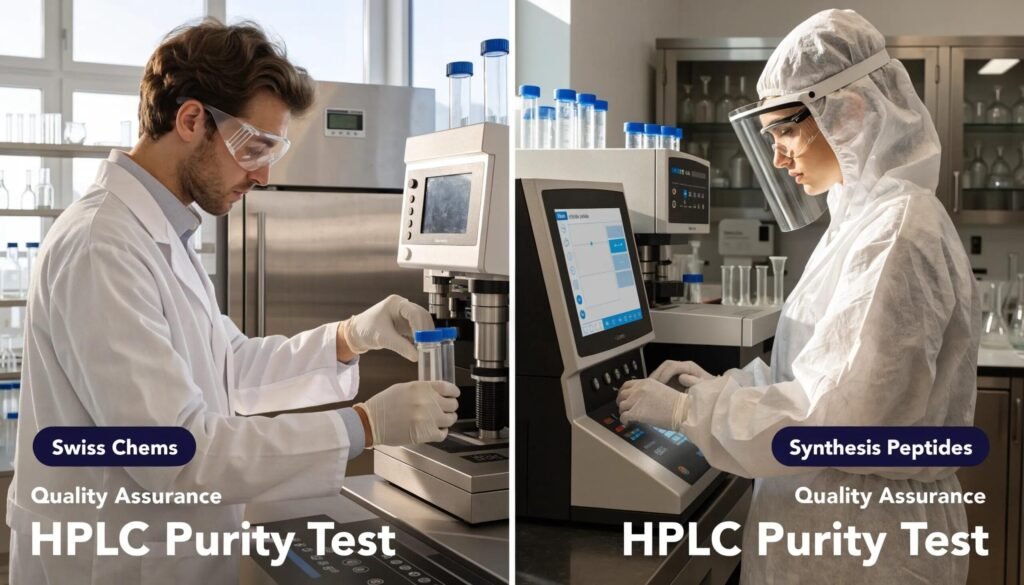
Independent laboratory testing can help determine whether a chemical sample contains the expected substance and whether unwanted contaminants are present.
However, not all testing documents provide the same level of confidence. Readers should consider whether the laboratory is independent, whether the testing method is appropriate, and whether the report clearly identifies the tested batch.
A certificate should not be treated as proof of human safety or clinical effectiveness.
Product Documentation
Reliable documentation helps people understand the identity and characteristics of a chemical compound.
Depending on the product, useful information may include chemical identification, batch details, analytical methods, purity measurements, and relevant safety documentation.
Missing or unclear documentation should encourage additional caution.
Manufacturing Standards
Manufacturing standards influence consistency and quality.
Organizations involved in chemical production should have appropriate procedures for handling materials, preventing contamination, and maintaining accurate records.
Consumers should avoid assuming that every online supplier follows the same quality standards.
How to Research Swiss Chems Before Making a Decision
Anyone investigating Swiss Chems should approach the subject carefully and systematically.
The following steps provide a useful framework.
1. Examine the company’s information.
Start by understanding the business, its product categories, and the intended applications described in its documentation. Look for clear company information rather than relying only on advertisements.
2. Research individual compounds.
Different compounds have different biological effects and potential risks. Search for peer-reviewed scientific literature that discusses the specific substance rather than depending on general statements about an entire product category.
3. Evaluate independent testing.
Look for batch-specific analytical reports where available. Check the laboratory’s identity, testing date, methods, and reported findings.
4. Read customer experiences critically.
Customer reviews can provide information about purchasing experiences, packaging, communication, and delivery. However, testimonials cannot establish medical effectiveness or safety.
5. Consider legal requirements.
Chemical regulations differ between countries. A product available online may still be restricted or subject to specific import, possession, or distribution rules in another jurisdiction.
6. Consult qualified professionals.
When a substance could affect health, discuss the relevant risks with a qualified healthcare professional. Avoid treating online product descriptions as medical advice.
Potential Risks Associated With Research Chemicals
Research chemicals deserve particular attention because some substances are sold despite having limited evidence regarding their effects on humans.
The potential risks depend on the individual compound, but several broader concerns are worth understanding.
Limited Human Research
Some experimental compounds have only been investigated in laboratory settings or animal studies.
Animal research can help scientists understand biological mechanisms, but results cannot automatically be applied to humans.
Differences in metabolism, dosage responses, and biological systems can produce very different outcomes.
Hormonal Effects
Certain compounds investigated for interactions with androgen receptors may affect natural hormonal regulation.
Possible consequences include changes in hormone levels and disruptions to normal physiological processes.
The severity and duration of these effects can vary.
Liver and Cardiovascular Concerns
Some substances have been associated with concerns involving liver function and cardiovascular health.
Changes in cholesterol levels, blood pressure, or liver markers can have important consequences.
People should not assume that a product is harmless simply because it is marketed as a research compound.
Product Mislabeling
Another concern involves inaccurate labeling or contamination.
If a product does not contain what its packaging claims, users and researchers may be exposed to unexpected substances.
This is one reason independent analytical testing and transparent documentation matter.
Swiss Chems Compared With Traditional Supplement Brands
Swiss Chems is often discussed in a different market segment from traditional sports nutrition companies.
Traditional supplement brands generally sell products such as protein powders, vitamins, minerals, and other nutritional products intended for consumer use.
Research-chemical suppliers operate in a more specialized area.
| Category | Traditional supplement brands | Research-chemical suppliers |
|---|---|---|
| Main focus | Nutrition and wellness | Specialized chemical compounds |
| Typical audience | General consumers and athletes | Research-focused audiences |
| Product information | Nutrition labels and ingredient lists | Chemical specifications and research documentation |
| Scientific considerations | Nutritional evidence | Compound-specific laboratory and clinical evidence |
| Safety considerations | Ingredient and supplement safety | Experimental compound risks and regulatory restrictions |
This comparison highlights why consumers should not evaluate all products using the same standards.
A nutritional supplement and an experimental research compound have different intended applications and potentially very different risk profiles.
The Importance of Scientific Research and Education
One of the most useful ways to understand brands such as Swiss Chems is to learn about the scientific subjects behind their products.
Scientific literacy helps readers separate established findings from unproven claims.
For example, understanding how receptors function can provide useful context when researching compounds that interact with hormonal pathways.
Similarly, learning about clinical trial phases helps explain why a substance investigated in early-stage research should not automatically be considered suitable for widespread human use.
A good starting point is to explore peer-reviewed publications, scientific databases, and information from recognized regulatory organizations.
Readers should pay attention to the quality of evidence. A controlled human clinical trial generally provides different information from a personal testimonial or an uncontrolled online experiment.
Research should also include potential adverse effects, not just possible benefits.
The Role of Online Reviews and Customer Experiences
Online reviews influence purchasing decisions across almost every industry, and the research-chemical market is no exception.
People often search for feedback about product consistency, customer service, shipping, packaging, and documentation.
These experiences can help readers understand certain aspects of a business.
However, reviews require careful interpretation.
A customer reporting successful delivery does not prove that a chemical is authentic. Similarly, someone describing positive personal results does not establish that a substance is clinically effective.
Reviews may also be influenced by individual expectations, incomplete information, or commercial interests.
A balanced evaluation should combine customer experiences with independent testing, scientific publications, and relevant regulatory information.
What Should Consumers Know About Regulations?
Regulations are especially important when dealing with specialized chemical products.
Different countries have different rules governing research chemicals, pharmaceuticals, supplements, and substances that affect biological systems.
A compound may be available through a website while remaining restricted for human consumption or subject to import controls.
People researching Swiss Chems should therefore investigate the laws that apply in their own country.
In addition, regulatory approval for one purpose does not automatically mean approval for another.
A chemical studied in a laboratory is not necessarily approved as a medicine, dietary supplement, or bodybuilding product.
Consumers should never assume that international shipping availability establishes legal permission to purchase or use a substance.
The Future of the Research-Chemical Industry
The research-chemical industry is likely to remain an area of interest as scientific knowledge continues to develop.
Advances in molecular biology, pharmaceutical research, analytical chemistry, and biotechnology are helping researchers investigate increasingly complex biological processes.
At the same time, improved testing technologies may make it easier to identify chemical substances and evaluate product composition.
Greater access to scientific information may also encourage consumers to ask more informed questions about product quality and safety.
However, the industry faces important challenges.
These include inconsistent product documentation, limited clinical evidence for certain compounds, regulatory differences, and the spread of exaggerated marketing claims.
Companies operating in this market will need to prioritize transparency and responsible communication if they want to build lasting credibility.
For consumers, the most valuable development will be access to reliable information that clearly distinguishes scientific evidence from commercial promotion.
Frequently Asked Questions About Swiss Chems
1. What is Swiss Chems known for?
Swiss Chems is associated with the online research-chemical market. Its name frequently appears in discussions involving specialized compounds, SARMs, peptides, and fitness-related research topics.
2. Is Swiss Chems a traditional supplement company?
It is generally associated with research chemicals rather than conventional sports nutrition products such as protein powders and everyday vitamins. These categories have different purposes and safety considerations.
3. Are products associated with Swiss Chems safe?
Safety cannot be established simply through a brand name or product description. Individual compounds may have limited human research and potentially significant health risks. Independent testing does not automatically establish clinical safety.
4. Why do bodybuilders discuss Swiss Chems?
Some bodybuilding communities discuss the brand because of its association with compounds investigated in relation to muscle development, hormonal pathways, and physical performance.
However, online discussions and personal experiences are not substitutes for scientific evidence.
5. How can someone evaluate a research-chemical supplier?
Important considerations include transparent company information, independent batch-specific testing, accurate product documentation, manufacturing practices, and compliance with applicable regulations.
6. Are research chemicals the same as dietary supplements?
No. Research chemicals and dietary supplements have different intended applications, regulatory considerations, and safety requirements. A research compound should never automatically be treated as an ordinary nutritional supplement.
Conclusion
Swiss Chems is a recognizable name in discussions surrounding research chemicals, specialized compounds, and the broader fitness research community. Its association with products such as SARMs, peptides, and other experimental substances has contributed to interest among people exploring scientific developments related to physical performance and biological processes.
However, understanding the brand requires a balanced perspective. Product availability, online popularity, customer testimonials, and commercial descriptions do not establish that a substance is safe, effective, or approved for human use.
Anyone researching Swiss Chems should prioritize independent testing, reliable scientific publications, transparent documentation, and applicable legal requirements. It is equally important to recognize the limitations of experimental research and the potential health risks associated with poorly studied compounds.
Ultimately, informed decision-making begins with reliable evidence. Whether someone is interested in chemistry, fitness science, or the research-chemical industry, taking time to understand the science behind individual compounds is far more valuable than relying on marketing claims or online popularity.