
Introduction
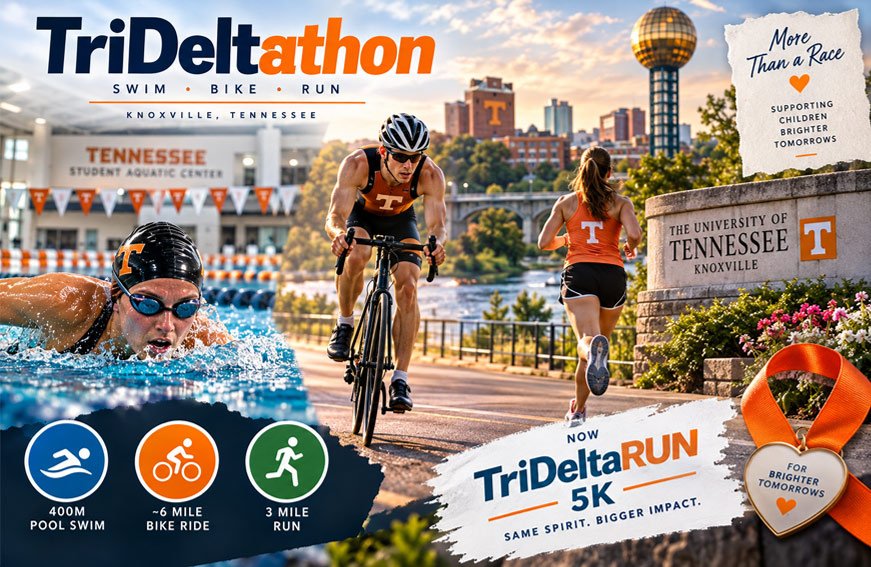
Sports have always played an important role in bringing people together. Whether through professional competitions, community races, or charity events, athletic activities create opportunities for people to challenge themselves while supporting meaningful causes. One interesting example of this combination is Trideltathon, a charitable sporting event associated with the University of Tennessee in Knoxville, Tennessee.
Trideltathon brings together three popular athletic disciplines: swimming, cycling, and running. However, its purpose extends beyond physical competition. The event has historically connected university students, athletes, volunteers, and local supporters through fundraising efforts that benefit children’s healthcare organizations.
The name itself attracts curiosity because it combines the identity of Tri Delta with the traditional concept of a triathlon. For people discovering this event for the first time, understanding its background, sporting format, charitable mission, and community involvement provides a clearer picture of why it is distinctive.
This article explores Trideltathon in detail, including its origins, activities, benefits, preparation strategies, and continuing significance in community sports.
What Is Trideltathon?
Trideltathon is the name associated with a charity-focused triathlon historically organized with support from the Delta Delta Delta sorority chapter at the University of Tennessee. Commonly known as Tri Delta, this organization has a long-standing connection with community involvement and charitable activities.
Unlike traditional athletic competitions that focus primarily on rankings and personal records, Trideltathon combines physical achievement with fundraising. Participants challenge themselves through swimming, cycling, and running while helping raise money for children’s healthcare causes.
The event has historically taken place in Knoxville, Tennessee, with the University of Tennessee serving as its central location. Its format has included an indoor swimming stage followed by cycling and running routes around the university campus.
One distinctive feature is its accessibility. The relatively short distances make the historical race format approachable for recreational athletes and people interested in experiencing their first triathlon.
Trideltathon is therefore more than an ordinary sporting competition. It represents a combination of athletic participation, student engagement, volunteer service, and charitable responsibility.
The Meaning Behind the Name Trideltathon
The name Trideltathon provides an interesting clue about the event’s identity.
The first part relates to Tri Delta, the familiar name of Delta Delta Delta, a national collegiate sorority. The second part reflects the word triathlon, which describes a multisport competition involving swimming, cycling, and running.
Combining these elements creates the distinctive name Trideltathon.
The name communicates the event’s connection with the sorority while highlighting its athletic character. It also gives the competition an identity that distinguishes it from ordinary running races, cycling events, and other community fundraisers.
Names play an important role in establishing recognition for charitable activities. A distinctive name makes an event easier to remember, discuss, and recognize within a university community.
In this case, Trideltathon reflects the relationship between an established student organization and a sporting tradition built around helping others.
The History and Background of Trideltathon
Trideltathon developed into a recognizable part of the local sporting and charitable community in Knoxville.
Historical race listings identify the event as a long-running pool triathlon connected with the University of Tennessee. A 2020 registration listing described that edition as the 36th year, suggesting a history extending back several decades.
The event also became associated with the local triathlon community, with university participants and volunteers helping create an organized environment for competitors.
Its charitable purpose has been an important part of its identity. Historical event information identifies East Tennessee Children’s Hospital as a beneficiary. This connection gave participants an opportunity to contribute to children’s healthcare while taking part in an athletic challenge.
Over time, Trideltathon became associated with more than physical competition. It demonstrated how student organizations could use recreational activities to support causes that mattered to their surrounding communities.
Like many local events, its history has also been influenced by changing circumstances. The 2020 edition was canceled during the COVID-19 disruption, illustrating how public health conditions can affect university activities and community sporting traditions.
Although historical information documents earlier editions, prospective participants should verify current event announcements rather than assume that previous schedules or registration arrangements remain active.
The Three Main Activities of Trideltathon
The central attraction of Trideltathon is its combination of three athletic disciplines. Each activity requires different physical abilities, making the event an interesting challenge for participants.
1. Swimming
Swimming traditionally represents the first stage of the competition.
Historical descriptions of the Knoxville event identify a 400-meter pool swim. Using an indoor swimming facility offers several practical advantages compared with open-water competitions.
Participants can swim in a controlled environment without dealing with natural water currents, waves, or changing weather conditions. Pool lanes also make it easier for organizers to manage competitors and maintain a structured starting process.
Swimming requires coordination, breathing control, endurance, and proper technique. Participants benefit from practicing their swimming skills before race day.
For beginners, becoming comfortable in the water is particularly important. Regular swimming sessions can help improve confidence and reduce unnecessary exhaustion during the competition.
2. Cycling
The second discipline involves cycling.
Historical Trideltathon course descriptions list a cycling distance of approximately six miles. This section provides participants with an opportunity to demonstrate their cardiovascular fitness and bicycle-handling abilities.
Cycling requires more than simply moving quickly. Competitors must maintain balance, control their speed, understand the route, and manage their energy.
A comfortable and properly maintained bicycle is essential. Participants should inspect their brakes, tires, chain, and gears before the event.
Cycling also introduces an interesting transition between the swimming and running stages. Athletes need to adjust their movement and pacing after completing the first discipline.
3. Running
Running completes the traditional three-part competition.
Historical course information lists a running distance of approximately three miles. Although this distance may appear manageable, completing it after swimming and cycling requires endurance and careful energy management.
Participants must avoid starting too quickly because fatigue can develop during the earlier stages.
Running also creates an exciting conclusion to the competition. Athletes can focus on maintaining a steady pace and completing the final stage safely.
The combination of these three activities makes Trideltathon a rewarding experience for people interested in multisport athletics.
The Charitable Mission Behind Trideltathon
One of the most meaningful aspects of Trideltathon is its connection with charitable fundraising.
Many sporting competitions focus on personal achievements, medals, and rankings. Charity events introduce another important objective by directing attention toward people and organizations that need support.
Historically, Trideltathon has been associated with East Tennessee Children’s Hospital in Knoxville.
Children’s hospitals provide important medical services, including specialized treatment, emergency care, diagnostic services, and support for families dealing with difficult medical situations.
Fundraising activities can help charitable healthcare organizations maintain services, improve facilities, and support programs for young patients.
Trideltathon demonstrates how recreational sports can contribute to these objectives. Participants are not simply competing against one another. They are also helping create awareness and financial support for an important community cause.
This charitable connection gives the event an emotional dimension that makes participation meaningful beyond the finish line.
The Role of Delta Delta Delta
Delta Delta Delta, widely known as Tri Delta, has an important connection with the event.
The sorority is a national collegiate organization that encourages friendship, leadership, personal development, and community involvement.
Its participation in charitable activities reflects the broader role that student organizations can play within universities.
By helping organize and support sporting events, sorority members can develop practical skills while contributing to their local communities.
These responsibilities may include volunteer coordination, event promotion, participant communication, fundraising activities, and logistical planning.
Organizing a successful triathlon requires teamwork. Members must cooperate with other volunteers, understand the needs of participants, and help maintain a welcoming environment.
This experience can also provide valuable leadership opportunities for students.
Trideltathon illustrates how university organizations can connect their social activities with meaningful community contributions.
Why Trideltathon Is Different From an Ordinary Triathlon
Although Trideltathon follows the traditional swim-bike-run structure, its charitable foundation gives it a distinctive character.
There are several reasons why this event stands apart.
A community-focused atmosphere: The event brings together university students, recreational athletes, volunteers, and supporters. This creates an environment in which participation and encouragement are important.
A charitable objective: Its historical connection with children’s healthcare provides a purpose beyond athletic competition.
An approachable race format: The relatively short historical distances make the competition relevant to beginners and recreational athletes who want to experience multisport racing.
University involvement: Its connection with the University of Tennessee creates opportunities for student leadership, teamwork, and community engagement.
Multiple participation opportunities: Historical event information includes individual and relay formats, allowing participants to approach the competition in different ways.
These qualities help explain why charity triathlons can attract people who might not normally consider entering a conventional athletic competition.
Benefits of Participating in Trideltathon
Taking part in an event like Trideltathon can provide several physical, personal, and social benefits.
Improved Physical Fitness
Swimming, cycling, and running develop different areas of physical fitness.
Swimming engages multiple muscle groups and encourages cardiovascular endurance. Cycling strengthens the lower body, while running improves stamina and cardiovascular conditioning.
Training for all three disciplines can create a balanced exercise routine.
Personal Confidence
Completing a triathlon requires preparation, commitment, and determination.
For someone participating for the first time, reaching the finish line can represent a significant personal achievement.
The experience may also encourage individuals to establish new fitness goals and explore other sporting activities.
Community Connections
Charity events create opportunities to meet people with similar interests.
Participants can interact with athletes, university students, volunteers, and supporters. These connections may develop into friendships and future opportunities for community involvement.
Supporting a Meaningful Cause
Perhaps the most important benefit is the opportunity to contribute to charitable work.
Knowing that an athletic challenge supports children’s healthcare can provide additional motivation throughout training and competition.
How Beginners Can Prepare for a Trideltathon-Style Event
People interested in participating in a similar triathlon should begin preparing well before race day.
The first step is to evaluate their current fitness levels. Someone who regularly swims, cycles, and runs may require less preparation than someone who is new to these activities.
A balanced training schedule should include all three disciplines.
Develop swimming confidence: Practice regularly in a supervised swimming environment. Focus on breathing, technique, and maintaining a comfortable pace.
Build cycling endurance: Start with shorter rides and gradually increase the distance. Check bicycle maintenance and practice controlling speed.
Improve running stamina: Combine comfortable running sessions with walking intervals if necessary. Gradually increase endurance rather than attempting difficult distances immediately.
Practice transitions: Moving from one discipline to another requires preparation. Practicing the transition between swimming, cycling, and running can make race day less stressful.
Prioritize recovery: Rest days, hydration, balanced nutrition, and sufficient sleep are important parts of any training program.
Beginners should also consult healthcare professionals when appropriate before beginning demanding exercise routines, particularly if they have concerns about their ability to participate safely.
The Importance of Volunteers and Community Support
Behind every successful sporting event is a team of people working to make the experience possible.
Volunteers are particularly important in charity competitions because they help manage activities that participants may not see.
Their responsibilities can include preparing facilities, guiding athletes, managing registration, providing directions, supporting transitions, and helping maintain safety.
Community supporters also contribute by encouraging participants and spreading awareness about the charitable mission.
University organizations can use these opportunities to develop leadership and organizational abilities.
For Trideltathon, the involvement of the university community and Tri Delta members has historically helped connect athletics with charitable engagement.
This cooperation demonstrates that community events depend on more than competitors. They require people who are willing to contribute their time, energy, and organizational skills.
Is Trideltathon Still Being Organized?
One important question for people discovering Trideltathon is whether the original competition is currently accepting participants.
Historical information confirms that the Knoxville event existed and had a long-running history. However, historical registration listings do not establish that a new edition is currently scheduled.
The distinction between the original Trideltathon and related charitable running activities is also important.
For example, TriDeltaRUN is a separate running-focused event associated with the same broader community tradition. It should not be confused with the original swim-bike-run competition.
Anyone interested in participating should check current announcements from the relevant university organization and event organizers.
Important details to verify include:
- The official event date and location.
- Whether registration is currently available.
- The competition format and distances.
- Eligibility and age requirements.
- Individual and relay participation options.
- Current fundraising beneficiaries.
- Safety instructions and equipment requirements.
Checking these details helps prospective participants avoid relying on outdated information.
Frequently Asked Questions About Trideltathon
1. What is Trideltathon?
Trideltathon is a charity-focused triathlon historically associated with Delta Delta Delta at the University of Tennessee in Knoxville. Its traditional format includes swimming, cycling, and running.
2. Where was Trideltathon held?
The historical event took place in Knoxville, Tennessee, with its swimming stage associated with the University of Tennessee Student Aquatic Center.
3. What are the traditional Trideltathon distances?
Historical race listings describe a 400-meter swim, a six-mile cycling section, and a three-mile running section.
4. Who organizes Trideltathon?
The event has historically been associated with the University of Tennessee’s Delta Delta Delta sorority chapter, alongside local event and triathlon community support.
5. What is the charitable purpose of Trideltathon?
Historical event information identifies East Tennessee Children’s Hospital as a beneficiary. The competition combines athletic participation with charitable fundraising.
6. Is Trideltathon suitable for beginners?
Its relatively short historical distances make it an approachable format for recreational athletes. However, participants should develop adequate swimming, cycling, and running abilities before competing.
7. Is Trideltathon the same as TriDeltaRUN?
No. Trideltathon is historically a three-discipline competition involving swimming, cycling, and running. TriDeltaRUN is a separate running-focused event.
8. Can participants compete in teams?
Historical event listings describe relay participation, allowing multiple competitors to divide the three athletic disciplines.
Conclusion
Trideltathon represents an interesting combination of sports, university involvement, and charitable fundraising. Its historical connection with Delta Delta Delta and the University of Tennessee helped establish an event that brought people together through swimming, cycling, and running.
What makes Trideltathon particularly meaningful is its purpose beyond athletic achievement. By connecting physical activity with support for children’s healthcare, it demonstrates how community sporting events can contribute to something larger than individual competition.
Its historical race format, approachable distances, volunteer involvement, and charitable foundation make it a noteworthy example of university-based community engagement.
Although prospective participants should verify whether a new edition is scheduled, the event’s documented history offers a valuable reminder that sports can create opportunities for personal growth while supporting meaningful causes.
Ultimately, the story of Trideltathon highlights the power of teamwork, determination, and community spirit. It shows that a finish line can represent much more than completing a race. It can also symbolize collective effort, generosity, and a shared commitment to helping others.