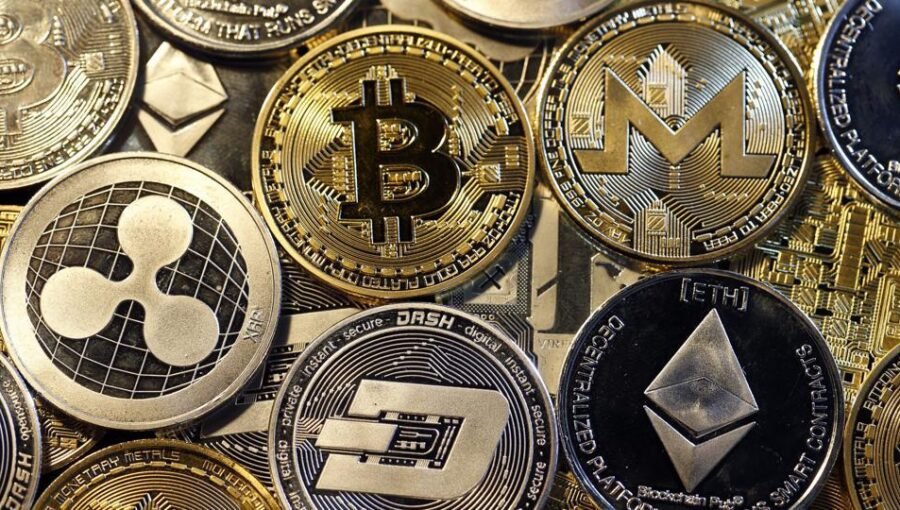

The cryptocurrency market continues to attract investors who want to explore new financial opportunities, diversify their portfolios, and participate in the growth of blockchain technology. From established digital currencies to innovative blockchain projects, the industry offers numerous possibilities for people with different investment goals. However, choosing the best crypto to buy requires careful research, an understanding of market conditions, and a realistic view of potential risks.
Cryptocurrencies can experience significant price movements within short periods. Some projects develop strong ecosystems and attract long-term users, while others struggle to maintain interest. Therefore, investors should look beyond temporary price increases and examine the technology, adoption, security, development activity, and real-world usefulness behind each cryptocurrency.
In 2026, several established cryptocurrencies and emerging blockchain ecosystems deserve attention. Bitcoin and Ethereum remain important names in the industry, while projects such as Solana and other blockchain networks offer different opportunities. Understanding their strengths and limitations can help investors make more informed decisions.
This article explores the factors that matter when choosing cryptocurrencies, some major digital assets worth researching, and practical strategies for approaching the market responsibly.
Understanding What Makes the Best Crypto to Buy
There is no single cryptocurrency that is guaranteed to deliver the highest returns. best crypto to buy The best choice depends on an investor’s financial goals, risk tolerance, investment period, and understanding of the technology.
Nevertheless, several factors can help distinguish established projects from highly speculative digital assets.
Real-World Utility
A cryptocurrency should ideally solve a meaningful problem or support a useful digital ecosystem. Bitcoin, for example, is widely recognized as a decentralized digital asset. Ethereum supports smart contracts and decentralized applications, allowing developers to create financial services, games, and other blockchain-based products.
Projects with practical applications may have stronger long-term foundations than tokens that depend primarily on online attention.
Security and Reliability
Security is another important consideration. Investors should investigate a network’s history, consensus mechanism, development practices, and previous security incidents.
A cryptocurrency with an established security record and a transparent development community may offer more confidence than a newly launched project with limited testing.
Market Liquidity
Liquidity describes how easily an asset can be purchased or sold without significantly affecting its price. Larger cryptocurrencies generally have more established trading markets than smaller tokens.
For investors, liquidity matters because it can make entering and leaving positions easier, particularly during periods of market volatility.
Development and Adoption
Active development can indicate that a project is continuing to improve. However, development activity alone does not guarantee success. Investors should also examine whether people, businesses, developers, and applications are actually using the network.
A strong ecosystem combines useful technology with sustained adoption.
Top Cryptocurrencies to Consider in 2026
The following cryptocurrencies represent different areas of the digital asset industry. They are worth researching because of their established networks, technological applications, or developing ecosystems. They are not guaranteed investments, and their inclusion does not mean they are suitable for every investor.
1. Bitcoin (BTC): A Leading Choice for Long-Term Investors
Bitcoin is the first cryptocurrency and remains one of the most recognized digital assets worldwide. Introduced in 2009, it operates through a decentralized network that allows users to transfer value without depending on a traditional financial institution.
Bitcoin has a maximum supply of 21 million coins. This limited supply is one reason investors often compare it with gold. Its network uses proof-of-work technology, which allows miners to validate transactions and maintain the blockchain.
Several factors make Bitcoin worth considering:
- Strong brand recognition across the cryptocurrency industry.
- A large and established trading market.
- Growing participation from institutional investors.
- A transparent monetary supply structure.
- A long operating history compared with most digital assets.
Bitcoin is often considered a starting point for people exploring cryptocurrency investments. However, its established position does not eliminate risk. Its price can decline significantly during market downturns, and investors should avoid assuming that historical growth guarantees future returns.
2. Ethereum (ETH): A Major Platform for Blockchain Applications
Ethereum is another important cryptocurrency to examine when researching the best crypto to buy. Unlike Bitcoin, which primarily focuses on decentralized digital money, Ethereum provides a programmable blockchain that supports smart contracts.
Smart contracts are automated programs that execute transactions when specific conditions are satisfied. They support decentralized finance, digital collectibles, blockchain gaming, and tokenized assets.
Ethereum’s ecosystem includes thousands of developers and numerous applications. Its technology also supports Layer 2 networks, which aim to improve transaction capacity and reduce costs.
Some reasons investors follow Ethereum include:
- A well-established smart contract ecosystem.
- Extensive decentralized finance activity.
- Support for stablecoins and tokenized assets.
- A large developer community.
- Staking opportunities for eligible participants.
However, Ethereum faces competition from alternative blockchain networks. Network fees, scalability, upgrade delays, and changing demand can influence its long-term performance. Investors should also understand that staking involves technical and market risks.
3. Solana (SOL): A Blockchain Focused on Speed
Solana has become a major competitor in the smart contract industry. It is designed to process transactions quickly while supporting decentralized applications and digital asset markets.
Solana attracts developers working on decentralized exchanges, gaming applications, NFTs, and financial services. Its relatively fast transaction processing makes it attractive for applications that require frequent interactions.
Its potential advantages include:
- Fast transaction processing.
- Relatively low transaction costs.
- An active developer ecosystem.
- Growing decentralized finance applications.
- Support for consumer-focused blockchain products.
Nevertheless, Solana is not without challenges. Network reliability, competition, ecosystem concentration, and market speculation remain important concerns.
The network’s Alpenglow upgrade went live in October 2026, representing a significant technical development. However, technical improvements do not automatically translate into higher token prices. Crypto.com International+1
4. XRP: A Cryptocurrency Focused on Payments
XRP is a digital asset associated with the XRP Ledger, a blockchain designed to facilitate payments and transfers of value.
Its technology aims to make certain cross-border transactions faster and more efficient than traditional payment processes. This use case has attracted attention from financial technology companies and investors interested in the connection between blockchain systems and conventional finance.
XRP is worth researching for several reasons:
- A focus on international payments.
- An established digital asset ecosystem.
- Relatively fast transaction settlement.
- Continued development of the XRP Ledger.
- Potential applications in financial services.
However, investors should distinguish between Ripple, the company, and XRP, the cryptocurrency. The success of a company does not necessarily guarantee an increase in the value of its associated digital asset.
Regulatory developments, competition, token distribution, and actual network usage can all influence XRP’s future.
5. Chainlink (LINK): Connecting Blockchains With External Data
Chainlink provides infrastructure that helps smart contracts access information from outside their blockchain networks. This technology is important because many decentralized applications require accurate external data to function correctly.
For example, decentralized financial platforms may need cryptocurrency prices, while other applications might require information about financial markets or real-world events.
Chainlink’s oracle technology helps connect these external data sources with blockchain-based applications. Its Cross-Chain Interoperability Protocol also aims to support communication between different blockchain networks.
Important strengths include:
- Infrastructure for decentralized applications.
- External data connectivity.
- Cross-chain communication technology.
- Potential applications in tokenized real-world assets.
- Partnerships and integrations across blockchain ecosystems.
LINK may appeal to investors interested in the infrastructure supporting the wider cryptocurrency industry. Still, competition, token economics, adoption rates, and the relationship between network usage and token demand deserve careful examination.
6. Hyperliquid (HYPE): An Emerging Decentralized Trading Ecosystem
Hyperliquid has attracted attention through its decentralized trading platform, particularly its focus on perpetual futures markets.
The platform aims to provide an exchange-like trading experience using blockchain technology. Its ecosystem has expanded beyond conventional cryptocurrency markets, making it an interesting project to examine.
Potential reasons for following HYPE include:
- Activity in decentralized derivatives trading.
- A growing trading ecosystem.
- Blockchain-based financial infrastructure.
- Continued platform development.
- Exposure to the expanding decentralized exchange sector.
However, HYPE carries considerable risks. Derivatives platforms can face regulatory challenges, liquidity changes, security concerns, and fluctuations in trading activity. Its recent popularity should not be mistaken for guaranteed long-term success. The Motley Fool+1
Comparing the Cryptocurrencies
Different cryptocurrencies serve different purposes. Comparing their main characteristics can make the research process easier.
| Cryptocurrency | Primary purpose | General risk profile |
|---|---|---|
| Bitcoin (BTC) | Digital asset and store of value | High |
| Ethereum (ETH) | Smart contracts and applications | High |
| Solana (SOL) | High-performance blockchain | Very high |
| XRP | Digital payments | High |
| Chainlink (LINK) | Blockchain data infrastructure | Very high |
| Hyperliquid (HYPE) | Decentralized trading | Very high |
These risk descriptions are broad rather than formal ratings. All cryptocurrencies can experience substantial losses, including established projects.
How to Choose the Best Crypto to Buy for Your Investment Goals
Choosing a cryptocurrency should begin with understanding your own investment objectives. Different digital assets offer different opportunities, and a strategy that works for one investor may not be appropriate for another.
Consider Your Investment Timeline
Your investment timeline can influence which cryptocurrencies deserve attention.
Long-term investors may prefer researching established networks such as Bitcoin and Ethereum. These projects have longer operating histories and relatively mature ecosystems.
Investors with higher risk tolerance might also investigate Solana, Chainlink, and Hyperliquid. However, smaller or more specialized projects can experience sharper price movements and greater uncertainty.
Research Tokenomics
Tokenomics refers to the economic structure of a cryptocurrency. It includes supply limits, distribution methods, token creation, staking rewards, and mechanisms that influence demand.
Before purchasing any cryptocurrency, investigate:
- Maximum and circulating token supply.
- Future token unlock schedules.
- Distribution among major holders.
- Inflation and reward mechanisms.
- Actual demand for the token.
Understanding tokenomics can help investors identify potential supply-related risks.
Examine Market Conditions
Cryptocurrency prices are influenced by more than individual project developments. Interest rates, inflation, investor sentiment, regulatory announcements, and institutional activity can affect the entire market.
For example, a promising cryptocurrency may decline when investors become less willing to hold risky assets.
Recent November 2026 market coverage has highlighted weakness in several major cryptocurrencies, alongside changing institutional investment flows. This demonstrates why investors should examine broader market conditions instead of relying entirely on optimistic predictions. Investing News Network (INN)+2
Important Risks to Understand Before Buying Cryptocurrency
Although cryptocurrency offers interesting technological possibilities, it remains a high-risk investment category. Understanding potential disadvantages is essential before committing money.
Market Volatility
Cryptocurrency prices can rise or fall dramatically. Even established assets can experience substantial corrections during uncertain economic conditions.
Investors should prepare for the possibility of losing a significant portion of their investment.
Regulatory Uncertainty
Government regulations can affect cryptocurrency exchanges, payment services, trading platforms, and blockchain companies.
Changes in tax requirements or restrictions can influence market access and investor confidence.
Scams and Fraudulent Projects
The cryptocurrency industry attracts fraudulent schemes, fake investment opportunities, and misleading promotions.
Be particularly cautious of projects promising guaranteed profits, unrealistic returns, or exclusive investment opportunities.
Security Problems
Digital assets can be lost through compromised wallets, stolen private keys, phishing attacks, and exchange failures.
Investors should use reputable platforms, enable additional account protection, and understand how cryptocurrency wallets work.
Lack of Guaranteed Returns
No cryptocurrency can guarantee profits. A project with impressive technology or a large community may still experience declining demand.
Avoid making investment decisions based entirely on social media recommendations or short-term price predictions.
Practical Strategies for Cryptocurrency Investors
A sensible investment approach can help individuals manage uncertainty and avoid unnecessary mistakes.
Start with a Research-Based Plan: Identify your investment objectives before purchasing any digital asset. Understand why you are interested in a particular cryptocurrency and what developments could weaken its investment case.
Consider Dollar-Cost Averaging: This strategy involves purchasing a fixed amount at regular intervals instead of investing everything at once. It can reduce dependence on a single purchase price, although it cannot eliminate market risk.
Diversify Carefully: Avoid placing all your investment capital into one cryptocurrency. Different blockchain networks have different strengths, but diversification within crypto does not eliminate the possibility of widespread market losses.
Use Secure Storage: Consider established wallets and security practices. Never share private keys or recovery phrases with anyone.
Review Your Investments: Cryptocurrency markets change quickly. Regularly review project development, token supply, adoption, and regulatory conditions to determine whether your original investment reasons remain valid.
Avoid Emotional Trading: Fear of missing out can encourage investors to purchase assets after major price increases. Similarly, panic can lead to rushed selling during temporary market declines. A clear investment plan can help reduce emotional decisions.
Is 2026 a Good Time to Buy Cryptocurrency?
Whether 2026 is a suitable time to purchase cryptocurrency depends on individual circumstances and market conditions.
The industry continues to develop through improvements in blockchain infrastructure, decentralized finance, tokenized assets, and digital payment systems. These developments could create opportunities for projects that deliver meaningful services.
However, market uncertainty remains important. Price declines, changing institutional demand, regulatory developments, and technological competition can affect even established cryptocurrencies.
Instead of attempting to predict the exact market bottom, investors can focus on researching strong projects, understanding valuation, and managing their exposure.
A gradual investment approach may be more manageable than making a large purchase based on short-term expectations. Anyone considering cryptocurrency should also maintain an appropriate emergency fund and avoid using borrowed money to speculate.
Frequently Asked Questions (FAQs)
1. What Is the Best Crypto to Buy in 2026?
best crypto to buy is a leading cryptocurrency to research because of its established network, liquidity, and recognition. Ethereum, Solana, XRP, and Chainlink are other projects worth examining. The right choice depends on individual risk tolerance and investment objectives.
2. Is Bitcoin Better Than Ethereum?
Bitcoin and Ethereum serve different purposes. Bitcoin primarily focuses on decentralized digital money, while Ethereum supports smart contracts and decentralized applications. Neither is automatically better for every investor.
3. Can Beginners Invest in Cryptocurrency?
Yes, beginners can explore cryptocurrency markets, provided they understand the risks. Starting with education, small amounts, reputable exchanges, and secure wallets can help develop responsible investment habits.
4. Is It Better to Buy One Cryptocurrency or Several?
Holding several carefully researched assets can reduce dependence on a single project. However, cryptocurrency markets can move together during major downturns, so diversification does not guarantee protection against losses.
5. How Much Money Should Someone Invest in Crypto?
There is no universally appropriate amount. Investors should consider their financial situation, obligations, emergency savings, and ability to tolerate losses. Only money they can afford to lose should be exposed to speculative cryptocurrency investments.
Conclusion
Finding the best crypto to buy in 2026 requires more than following popular market trends or searching for coins with the biggest recent price increases. Successful research involves understanding technology, adoption, tokenomics, market liquidity, security, and potential risks.
Bitcoin remains an important digital asset for investors interested in decentralized money and limited supply. Ethereum offers exposure to smart contracts and blockchain applications, while Solana provides an alternative ecosystem focused on transaction speed and decentralized services. XRP, Chainlink, and Hyperliquid represent additional opportunities in payments, blockchain infrastructure, and decentralized trading.
Ultimately, no cryptocurrency guarantees future profits. Investors should conduct independent research, maintain realistic expectations, protect their digital assets, and develop a strategy that matches their financial circumstances.
The most sensible approach is to prioritize projects with meaningful utility, transparent development, and sustainable adoption rather than chasing temporary excitement. In a rapidly changing industry, patience, education, and responsible risk management remain essential.