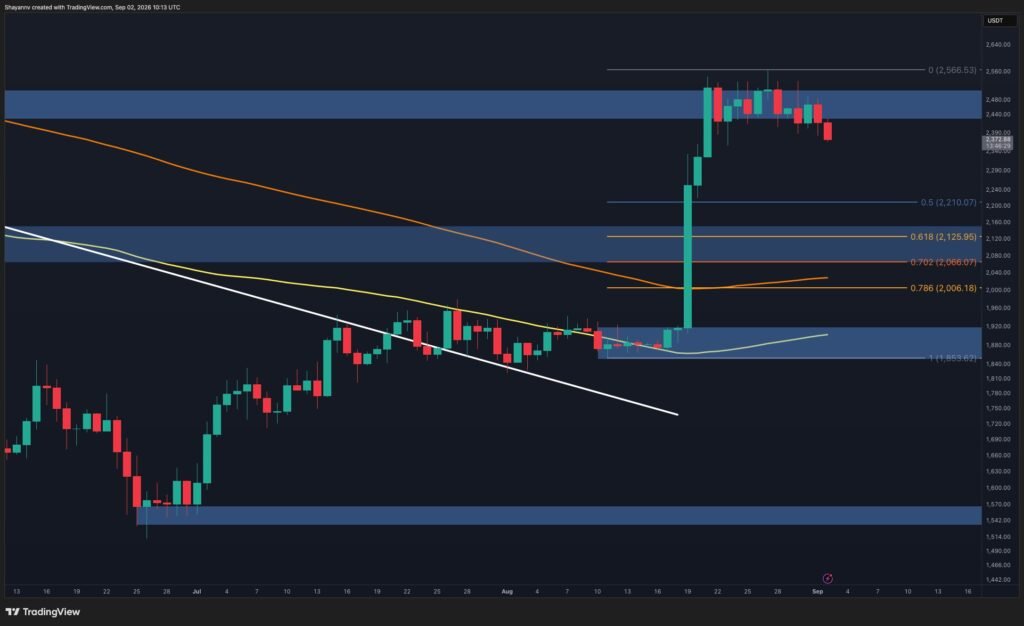

The cryptocurrency market is constantly evolving, and Ethereum remains one of the most important digital assets in this rapidly changing industry. Since its introduction, Ethereum has developed from a blockchain platform supporting digital transactions into a major ecosystem powering decentralized finance, smart contracts, non-fungible tokens, and numerous blockchain-based applications. As adoption continues to expand, investors and cryptocurrency enthusiasts are increasingly interested in understanding where its value could go next. This growing interest makes ethereum price prediction an important topic for anyone following the digital asset market.
Ethereum has experienced impressive growth throughout its history, but its journey has also included significant price corrections, market uncertainty, and changing investor sentiment. These movements demonstrate that predicting cryptocurrency prices is never straightforward. Economic conditions, technological improvements, institutional investments, regulations, and competition can all influence Ethereum’s future performance.
In this article, we explore Ethereum’s market position, important price drivers, possible future scenarios, and the factors investors should monitor when evaluating its long-term potential.
Understanding Ethereum and Its Importance in the Cryptocurrency Market
ethereum price prediction is a decentralized blockchain network that allows developers to create applications and execute smart contracts without relying on traditional intermediaries. Its native cryptocurrency, Ether (ETH), is used to pay transaction fees, participate in network security through staking, and support various activities throughout the ecosystem.
Unlike cryptocurrencies designed primarily as digital payment methods, Ethereum offers a programmable environment. Developers can build decentralized exchanges, lending platforms, gaming applications, digital identity solutions, and tokenization services on its infrastructure.
This flexibility has helped Ethereum establish a significant position in the blockchain industry. Many businesses and developers continue to explore its technology because it provides an established environment for creating decentralized applications.
Ethereum’s usefulness is particularly important when considering its future value. A cryptocurrency’s long-term potential depends not only on investor enthusiasm but also on whether people have meaningful reasons to use its underlying network.
As more organizations experiment with blockchain technology, Ethereum could benefit from additional demand. However, continued adoption does not automatically guarantee that ETH prices will increase.
Ethereum Price Prediction: Current Market Conditions in 2026
Ethereum’s performance in 2026 highlights the unpredictable nature of cryptocurrency investing. Market sentiment has experienced considerable changes, with economic uncertainty and fluctuating institutional demand influencing trading activity.
According to CoinMarketCap’s November 17, 2026 market analysis, ETH was trading around $1,812.82. The cryptocurrency had experienced a substantial weekly decline, reflecting broader weakness across digital asset markets.
This market environment demonstrates why investors should evaluate multiple indicators instead of depending on a single price forecast.
Several factors currently influence Ethereum’s market direction:
- Market sentiment: Investor confidence plays an important role in determining short-term buying and selling activity.
- Institutional demand: Investment flows through cryptocurrency funds can influence market liquidity and demand.
- Network development: Improvements in transaction capacity, security, and usability could strengthen Ethereum’s competitive position.
- Economic conditions: Interest rates, inflation, and global financial uncertainty can affect investment in speculative assets.
- Competition: Alternative blockchain networks continue developing technologies that compete with Ethereum.
Ethereum’s current position reflects both opportunities and challenges. Its established ecosystem provides a strong foundation, but investors still need to consider market risks before making financial decisions.
Major Factors That Could Influence Ethereum’s Future Price
Understanding the elements that influence ETH prices is essential when developing a realistic forecast. Several interconnected factors could shape Ethereum’s performance over the coming years.
1. Institutional Investment and ETF Demand
Institutional participation has become increasingly important in the cryptocurrency market. Financial organizations, investment companies, and professional traders now have more opportunities to gain exposure to digital assets.
Ethereum exchange-traded funds have created additional investment opportunities for institutions and individual investors. These products can make cryptocurrency exposure more accessible to people who prefer traditional financial investment platforms.
However, institutional demand is not always consistent. Fund withdrawals can create selling pressure, while sustained inflows may improve market confidence.
For Ethereum to experience a stronger recovery, continued institutional interest could become an important supporting factor.
Investors should monitor fund inflows and outflows rather than assuming that institutional involvement will always produce positive price movements.
2. Ethereum Network Upgrades
Technology development remains one of Ethereum’s most important long-term advantages.
The network regularly undergoes improvements designed to enhance scalability, efficiency, security, and user experience. These developments are important because blockchain adoption depends partly on how easily applications can operate.
The upcoming Glamsterdam upgrade has attracted attention because of its proposed improvements to execution capacity and network efficiency. Its expected benefits could make Ethereum more attractive to developers and businesses.
Nevertheless, planned upgrades should not be confused with completed achievements. Development schedules can change, and technical improvements need successful implementation before their potential benefits become clear.
If Ethereum continues improving its infrastructure, it could strengthen its position in the competitive blockchain market.
3. Decentralized Finance Growth
Decentralized finance, commonly known as DeFi, represents another important part of Ethereum’s ecosystem.
DeFi applications allow users to access financial services through blockchain-based systems. These services include lending, borrowing, exchanging digital assets, and providing liquidity.
Ethereum has played a major role in the development of decentralized finance. Many established protocols operate within its ecosystem or use compatible infrastructure.
Growing DeFi adoption could increase demand for blockchain services and create additional opportunities for ETH utilization.
However, DeFi also faces challenges involving smart contract vulnerabilities, regulatory uncertainty, liquidity problems, and market volatility. These risks could influence the pace of future growth.
4. Competition From Other Blockchain Networks
Ethereum does not operate without competition. Several blockchain networks are attempting to attract developers, investors, and everyday users through faster transactions, lower fees, and different technological approaches.
Solana and other emerging ecosystems have attracted attention because of their transaction performance and expanding application communities.
Competition can encourage innovation, but it can also affect Ethereum’s market position.
To maintain its leadership, Ethereum must continue improving its technology while providing developers with reliable infrastructure.
Its established ecosystem, developer community, and decentralized application environment remain important advantages.
Ethereum Price Prediction for the Rest of 2026
Forecasting Ethereum’s remaining performance in 2026 requires considering different possible market conditions.
Rather than treating one price target as guaranteed, it is more useful to examine bearish, moderate, and bullish scenarios.
Bearish Scenario
In a bearish environment, Ethereum could experience additional selling pressure if global financial markets weaken or cryptocurrency investors reduce their exposure to risky assets.
Continued ETF withdrawals, declining network revenue, and disappointing technical developments could also negatively influence sentiment.
Under these conditions, ETH could struggle to maintain important support levels and potentially move toward lower price ranges.
Some market projections have identified the $1,500 to $2,000 region as a possible downside scenario, although actual prices could move outside this range.
Moderate Scenario
A moderate scenario assumes that Ethereum stabilizes after recent volatility and gradually attracts renewed investor interest.
Improving economic conditions, steady network activity, and balanced institutional demand could support a recovery.
Under this scenario, Ethereum could attempt to regain higher trading levels as market confidence improves.
The $2,000 to $3,000 region represents an illustrative recovery range to monitor rather than a guaranteed forecast.
Bullish Scenario
A bullish scenario would require several positive developments to occur together.
These could include stronger institutional investment, successful network upgrades, increased decentralized finance activity, and improved cryptocurrency market conditions.
If these factors create sustained demand, Ethereum could experience a more substantial recovery.
However, bullish predictions should always be evaluated carefully because unexpected economic developments or regulatory changes could interrupt an otherwise positive trend.
Ethereum Price Prediction for 2027
Looking toward 2027, Ethereum’s performance may depend increasingly on whether its technological improvements translate into measurable adoption.
If developers continue building applications and businesses expand their use of blockchain infrastructure, Ethereum could benefit from stronger long-term demand.
Institutional adoption may also become more significant. Financial companies are exploring tokenized assets, blockchain settlement systems, and digital financial products.
Ethereum could participate in this development because its network already supports a large variety of decentralized applications and digital assets.
A moderate recovery scenario could place ETH in the $2,500 to $4,000 range during favorable market conditions.
A stronger bullish environment could produce higher valuations, particularly if institutional investment accelerates.
On the other hand, weak economic conditions and stronger competition could prevent Ethereum from reaching these levels.
Therefore, investors should view 2027 projections as possibilities rather than dependable financial targets.
Ethereum Price Prediction for 2030: Long-Term Possibilities
The long-term outlook for Ethereum is closely connected to the broader development of blockchain technology.
By 2030, blockchain-based financial services could become more integrated into traditional industries. Businesses may use decentralized infrastructure for international payments, digital ownership, financial settlement, and asset management.
Ethereum could benefit from these developments if it remains technologically competitive.
One important opportunity is real-world asset tokenization. This process involves representing traditional assets, such as government securities, investment funds, and other financial instruments, through blockchain-based tokens.
Ethereum’s established infrastructure makes it a potential participant in this expanding market.
Another opportunity involves stablecoins. These digital assets are designed to maintain relatively stable values and are increasingly used for payments, trading, and financial transfers.
Ethereum already supports significant stablecoin activity, giving it an important role in this sector.
For 2030, an illustrative moderate scenario could place Ethereum between $5,000 and $10,000 if adoption and demand improve substantially.
More optimistic forecasts could suggest higher valuations, but such outcomes would require sustained ecosystem growth, favorable regulations, and strong market conditions.
There is also a possibility that ETH performs below expectations if competing networks gain market share or blockchain adoption develops more slowly than anticipated.
The Importance of Ethereum Staking
Staking is another factor investors should understand when evaluating Ethereum’s long-term potential.
Ethereum uses a proof-of-stake consensus mechanism. Participants can stake ETH to help secure the network and participate in its validation process.
In return, eligible validators receive staking rewards, although these rewards fluctuate according to network conditions and other variables.
Staking can influence the available supply of ETH because some tokens remain committed to network validation rather than being immediately available for trading.
This dynamic may affect market supply and demand.
However, staking does not eliminate investment risk. ETH prices can decline even when staking participation increases. Participants must also consider validator requirements, withdrawal conditions, operational risks, and changing reward rates.
Investors should understand these details before deciding whether staking fits their financial objectives.
Risks That Could Affect Ethereum’s Future
Although Ethereum has significant technological potential, it faces several challenges that could influence its future value.
Cryptocurrency volatility: ETH prices can change dramatically within short periods. Market corrections can affect even established digital assets.
Regulatory uncertainty: Governments continue developing rules for cryptocurrency exchanges, decentralized finance, staking, and digital financial products. Unexpected regulatory changes could influence investor confidence.
Security concerns: Smart contract vulnerabilities, exchange failures, and cyberattacks remain important risks throughout the cryptocurrency industry.
Economic conditions: Higher interest rates, inflation, and reduced liquidity can encourage investors to move away from speculative investments.
Technological competition: Other blockchain networks may attract developers and users if they provide more attractive services or better performance.
Understanding these risks is just as important as identifying potential opportunities.
How Investors Can Evaluate Ethereum Before Investing
Anyone considering Ethereum should develop a research-based approach rather than relying entirely on online predictions.
First, examine the broader cryptocurrency market. Bitcoin’s performance, overall market capitalization, and investor sentiment can influence Ethereum’s direction.
Second, monitor Ethereum’s network activity. Transaction volumes, decentralized application usage, stablecoin activity, and staking participation can provide useful information about ecosystem development.
Third, follow institutional investment trends. ETF inflows and outflows may help investors understand changing demand among traditional financial participants.
Fourth, evaluate technical indicators. Moving averages, relative strength index readings, trading volume, and support and resistance levels can help identify market momentum.
Finally, establish a risk management strategy. Avoid investing money that cannot be afforded to lose, and understand the possibility of substantial price declines.
A disciplined approach can help investors make more informed decisions during uncertain market conditions.
Is Ethereum a Good Long-Term Investment?
Ethereum has several characteristics that make it an important cryptocurrency to study.
Its established developer ecosystem, smart contract functionality, decentralized finance infrastructure, and ongoing technological development provide potential long-term advantages.
However, being an important blockchain network does not automatically make ETH a profitable investment at every price.
Investors must consider valuation, market demand, competition, regulatory developments, and the possibility of unexpected setbacks.
Long-term investors may prefer to focus on Ethereum’s adoption and technological progress instead of reacting to every daily price movement.
Short-term traders, meanwhile, may pay closer attention to market momentum, liquidity, trading volume, and technical price levels.
Both approaches involve risk, and neither guarantees positive results.
Conclusion
The future of Ethereum remains an important subject for cryptocurrency investors as blockchain technology continues developing. Its established ecosystem, institutional investment opportunities, staking mechanism, and growing role in decentralized finance provide several potential sources of long-term demand.
Nevertheless, market volatility, regulatory uncertainty, technological competition, and changing economic conditions could influence its performance.
The ethereum price prediction outlook for 2026 and beyond should therefore be approached through multiple scenarios rather than a single guaranteed target. A gradual recovery is possible if network adoption improves and investor confidence returns, while additional declines remain possible if broader market conditions deteriorate.
For investors, the most valuable strategy is to follow reliable market information, understand Ethereum’s underlying technology, and evaluate both opportunities and risks before making financial decisions.
Ethereum has an important role in the cryptocurrency industry, but its long-term success will ultimately depend on its ability to deliver practical value, maintain technological competitiveness, and attract sustainable demand.